North East Bulgaria
Art, Archaeology & History Sites & Museums
Archaeology & History Sites in the North East
Aladzha Monastery
Not far from the well-known Golden Sands beach resort, in natural limestone cliffs, are the caves that made up the early medieval, Christian Orthodox Aladzha Monastery. Today fragments of frescoes and mosaics show the monastery was once beautifully decorated. During the Ottoman period, the influence of the monastery decline, and it was abandoned by the end of the 15th or beginning of the 16th century. The monastery is a very popular tourist attraction, with a steel staircase making access to the rock cut levels easy. During summer sound and light shows are held in the evenings.

Ovech Fortress, Provadia
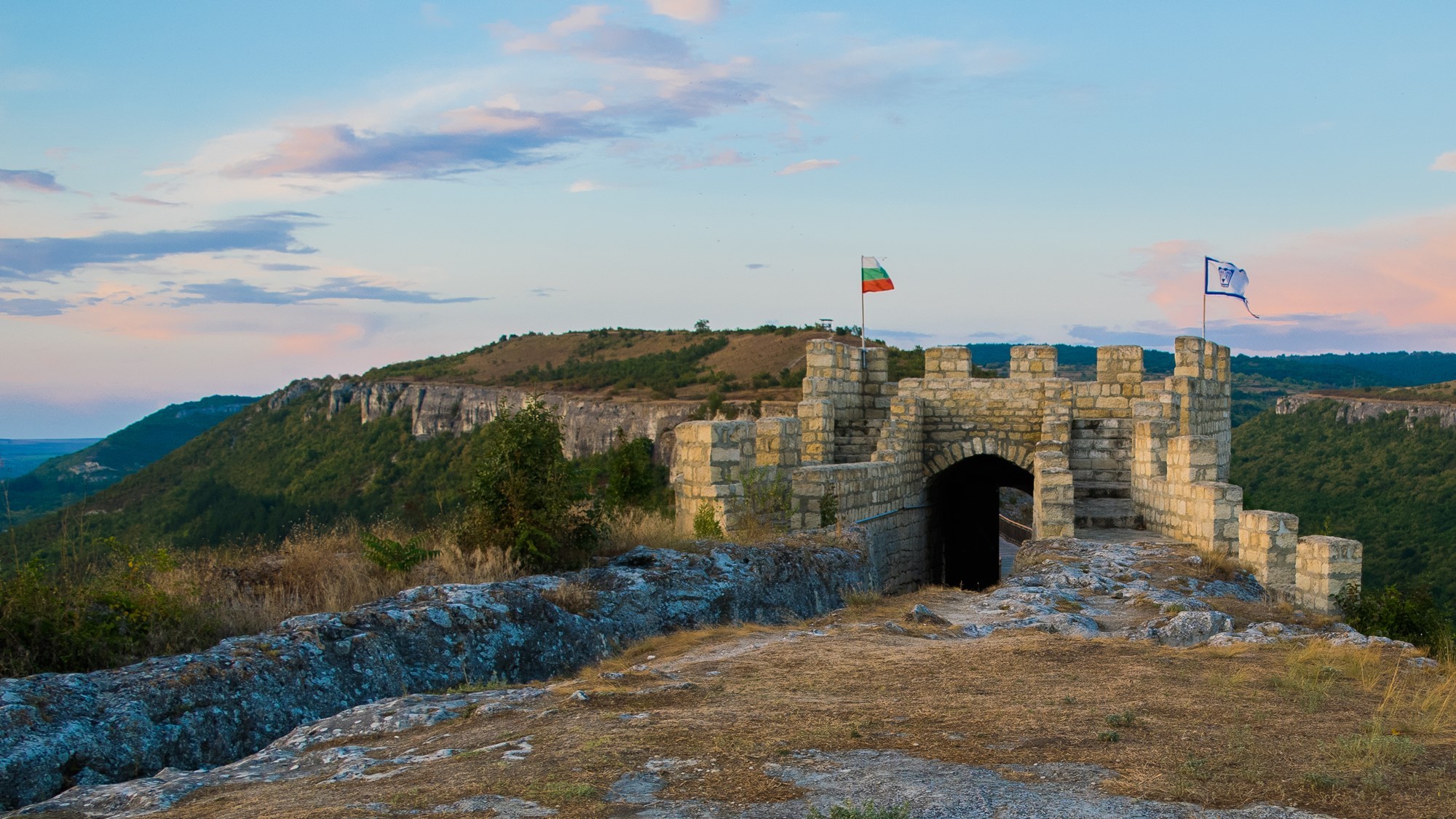
On the plateau immediately above the town of Provadia is the reconstructed stone fortress of Ovech. Various original rock-cut structures have survived. For example, the foundations of a 12th century church cut into bedrock are clearly visible, and it is surrounded by a number of rock-cut graves. What you see from the streets of Provadia is the medieval fortress, the site was first inhabited by the Thracians, followed successively by the Romans, Byzantines, Bulgarians, and the Turks – each leaving their mark.

Roman Thermae of Odessus, Varna
Located in the southeast of modern day Varna are the remains of a Roman public bath house. Built during the 2nd century AD when Varna was known as Odessus, these substantial ruins are amongst the best preserved Roman buildings in Bulgaria today. Covering a ground area of some 7000 m2 with some surviving walls at 22 m high, the bath house is the largest on the Balkan peninsular, and the fourth largest in Europe. Much of the complex has been excavated, and visitors can walk through the different sections, from theA small

Thermae of Odessos
Not far from the large Roman public bath house, next to the Varna Museum of Modern History, is a smaller public bathing complex. Construction here began in the 3rd century AD, and it was in use until at least the 6th century. This may have been because the larger bathing complex was abandoned in the 3rd or 4th centuries. The smaller bath house was built on top of a Thracian or Greek sanctuary, thought to be dedicated to the god Apollo. The site is not open all year round, although it can be viewed from the street.

Museums & Art Galleries in the North East
Naval Museum, Varna
The Naval Museum in Varna is a branch of the National Museum of Military History, which is located in Sofia. With indoor and outdoor exhibitions and a vast collection of artefacts, the museum not only tells the history of Bulgaria’s Navy, but all aspects of the nation’s seafaring history. One of the highlights of the museum is a torpedo-boat, the ‘Druzki’. Built in France in the early 1900s, the vessel was used in the Balkan War, and both the First and Second World Wars. As well as boats and armaments, the museum has a diverse collection naval memorabilia on display.