Travel Guides by Experienced Archaeologists & Historians

Bavaria
Art, History & Archaeology Sites & Museums

Throughout the world Bavaria and its capital city Munich is known for Oktoberfest, weißwurst sausages and folk music. Here too numerous medieval castles and Baroque churches are to be found in the picture perfect settings of forests and snow-capped mountains. This German state has seven UNESCO World Heritage sites, and estimates suggest there are over 1,200 museums to visit. From the city art and archaeology museums with their vast local and international collections, to smaller speciality museums such as the Medieval Crime Museum in Rothenburg. And, at the end of the year the Christmas markets in Nuremberg are among the finest in Germany.

Find Places to Visit in Bavaria

Featured Destination

The Pregnitz River and the water tower in Nuremberg.

NUREMBERG
From Imperial Seat to City of Human Rights

Bavaria’s second largest city has been the centre of historical events in Europe for many hundreds of years. Dominating the skyline is the Nuremberg Castle from where the Holy Roman Empire was administered. This central position in the Middle Ages would go on to shape the city for centuries to come. Cultural developments put Nuremberg at the centre of the German Renaissance. Political history made it a symbolic choice for the Nazi Party and their annual rallies until the start of World War Two. As the ceremonial birthplace of the Nazi Party and the racist Nuremberg Laws, it was a fitting city to host the Nuremberg Trials.

Archaeology & History Sites

Albrecht Dürer's House

From 1509, this is where one of Germany’s most celebrated artists, Albrecht Dürer, lived for 20 years. And where he made some of his most celebrated paintings. Now open to the public, with optional guided tours lead by an actress in the part of Dürer’s wife. The beautiful half timbered house is not only one of a few remaining houses from Nuremberg’s golden age,  it is also the only surviving house of a 15th century artist in northern Europe. Temporary exhibitions make use of the city’s important art collection, and often include examples of Dürer’s own paintings.

Bamberg Altes Rathaus

The UNESCO listed town of Bamberg has one of the most beautiful historic townhalls. Not only does it have a picturesque setting on the Regnitz River, the exterior walls are decorated with impressive frescoes painted in 1755 and repainted a number of times since. The Altes Rathaus is first mentioned in documents from 1387, but the building we see today was constructed in the 1460s. The interior is as impressive as the exterior, and the Rococo Hall should not be missed. The town hall is home to Ludwig Collection of porcelain – Europe’s largest private collection of porcelain.

Berlin Wall Fragment

To mark the 20th anniversary of the fall of the Berlin Wall, the publishing house Axel Springer gifted a segment of the wall to each of the 33 German States. Partly as a memorial to Axel Caesar Springer (1912 – 1985) and his dream of German reunification. But also as a symbol of freedom and a reminder of ever perpetual dangers. Nuremberg was chosen for the location of Bavaria’s fragment as many refugees from former East Germany settled here.

Cambodunum Archaeological Park

At the Cambodunum Archaeological Park in Kempten, visitors can explore the Roman town of Cambodunum, the administrative centre of the Rhaetia province during the 1st century AD. Many features of the town are visible in the park. The foundations of the forum and basilica are set out in the grass. A small thermal bath has been excavated and enclosed in a protective building. A number of features have also been reconstructed, including an impressive Gallo Roman temple. Parts of the site are freely accessible.

Dachau Concentration Camp Memorial Site

The memorial site for the Dachau concentration camp was established in 1965. Initially intended for Hitler’s political prisoners, the camp in the medieval village of Dachau was set up in the grounds of an abandoned munitions factory in March 1933. Dachau would become a model for all other concentration camps as well as a school for SS men. American troops freed the survivors on April 29 1945.  In the twelve years of its existence more than 200.000 people from all over Europe were imprisoned in Dachau and its 100 sub camps, of which some 41,500 were murdered. Immediately after the war the facility was used to house SS members waiting trial.

Eagle's Nest - Kehlsteinhaus

Completed in 1938, and run as a mountain restaurant since 1952, Kehlsteinhaus is an inn with a dark past. The location has spectacular views of the Berchtesgaden mountains towards Salzburg. But many people visit because of its history. It was built for the Nazis for government and social meetings. With the aid of text and historical photographs, a series of information panels tells the story of the site. The restaurant is closed in winter, and it is only possible to visit from May to October – weather conditions permitting. Access is only possible using a bus service that starts in the Obersalzberg car park.

Flossenbürg Castle

The ruins of the castle founded around 1100 stand on a striking, bare granite outcrop, overlooking the town of Flossenbürg. Originally a residential tower with a high ring wall, the castle was added to many times over the centuries, until it was set alight during the Thirty Year’s War and then abandoned. Recently, as part of a restoration programme, excavations were carried out during which a cellar vault was uncovered along with the remains of an oven. The ruins re a popular attraction, particularly for the striking view over the surrounding area.

Flossenbürg Concentration Camp Memorial

The concentration camp in Flossenbürg was established in March 1938 by the SS as a work camp; prisoners were set to work on the natural granite outcrops in the area. The first inmates were German political prisoners. By 1940, prisoners were coming from all over Europe to be exploited for their labour. As a forced labour camp, conditions were harsh and inhumane, and many died from mistreatment. After the war, the camp was all but ignored. Only in 1995, at the request of survivors, was the site transformed into a memorial. A permanent exhibition has been established, with a route through the historical site.

Kloster Andechs

Today this imposing Baroque church on a hill in the small Bavarian town of Andechs is known for its monastic brewery and the final resting place of the composer Carl Orff, as well as a number of Bavarian princes. But the history of the heilege berg (holy mountain) goes back to at least the 11th century when an earlier church was built for the safekeeping of relics. Ever since, the abbey has been an important pilgrimage site. Each year over 30,000 pilgrims and many thousands of tourists make their way here. Some historians suggest this is Bavaria’s oldest pilgrimage.

Medieval Rock-Cut Tunnels

An extensive network of underground, rock cut tunnels that are in some places four storeys deep, reaching to a depth of 20 m. It is thought they were cut around 700 years ago for a space where beer could be matured an stored throughout the year. During WWII the tunnels were upgraded to provide shelter – the entrance at the Älbrecht Dürer statue was created then. When Nuremberg was devastated by air raids in January 1945, thousands of citizens found shelter in the beer cellars. Guided tours of the historic tunnels are available daily.

Museums & Art Galleries

Archäologische Staatssammlung, München

Founded in 1885, the State Archaeology Collection of Bavaria is one of the largest and most important archaeological collections in Germany. There are five collections: prehistory, Roman, medieval, the Mediterranean and numismatics. The museum, with extensive permanent exhibits is located in central Munich in walking distance of the Marianplatz, and is normally open to the public everyday except Mondays.

Bamberg Historical Museum

Today the Bamberg Historical Museum is housed in the city’s old court, the Alte Hofhaltung, next to the Bamberg Cathedral. The museum has its origins in a local vicar’s art collection that was bequeathed to the city in 1838. Since then the museum has grown significantly with collections representing all periods from prehistory to the 21st century. Two permanent exhibitions of note are “In the Flow of History. The River Regnitz as Bamberg’s Lifeline”, a history of the city and its surroundings, and “Jewish Life in Bamberg”.

Bavarian Forest Museum Village, Tittling

At the Bavarian Forest Museum Village in Tittling, a range of historic buildings from across Bavaria have been brought together. One of the largest open-air museums in Europe, it covers an area of 25 hectares of countryside and its collection includes over 150 buildings of 16th to 19th century date. In addition, it possesses around 60,000 artefacts associated with rural folk culture from this region, ranging from agricultural implements to string puppets.

Celtic Roman Museum, Manching

The Bavarian town of Manching is situated on what was a large, late Iron Age city-like settlement – the Oppidum of Manching. Excavations have recovered spectacular Celtic artefacts, including a hoard of 483 Celtic gold coins. The Iron Age settlement was founded in the 3rd century BC and abandoned in the mid 1st century BC. The strategic position made the site attractive to the Romans. Today, the Kelten Römer Museum Manching showcases the best artefacts from the Iron Age and Roman periods of the area.

DB Museum Nuremberg

The centrepiece of the Nuremberg branch of the DB Museum is the history of the railway in Germany. Spread across two floors, the permanent exhibition covers over 200 years of rail history. There are a number of other permanent and temporary exhibition areas, indoors and outdoors, with most visitors spending between 2 – 3 hours here. The model railroad has over 500m of track, and there are more than 2,000 models of all sizes, from 1:5 scale to 1:700. During the summer, and when it is dry, take a ride on the light railroad in the open-air grounds.

Documentation Center at Nazi Party Rally Grounds

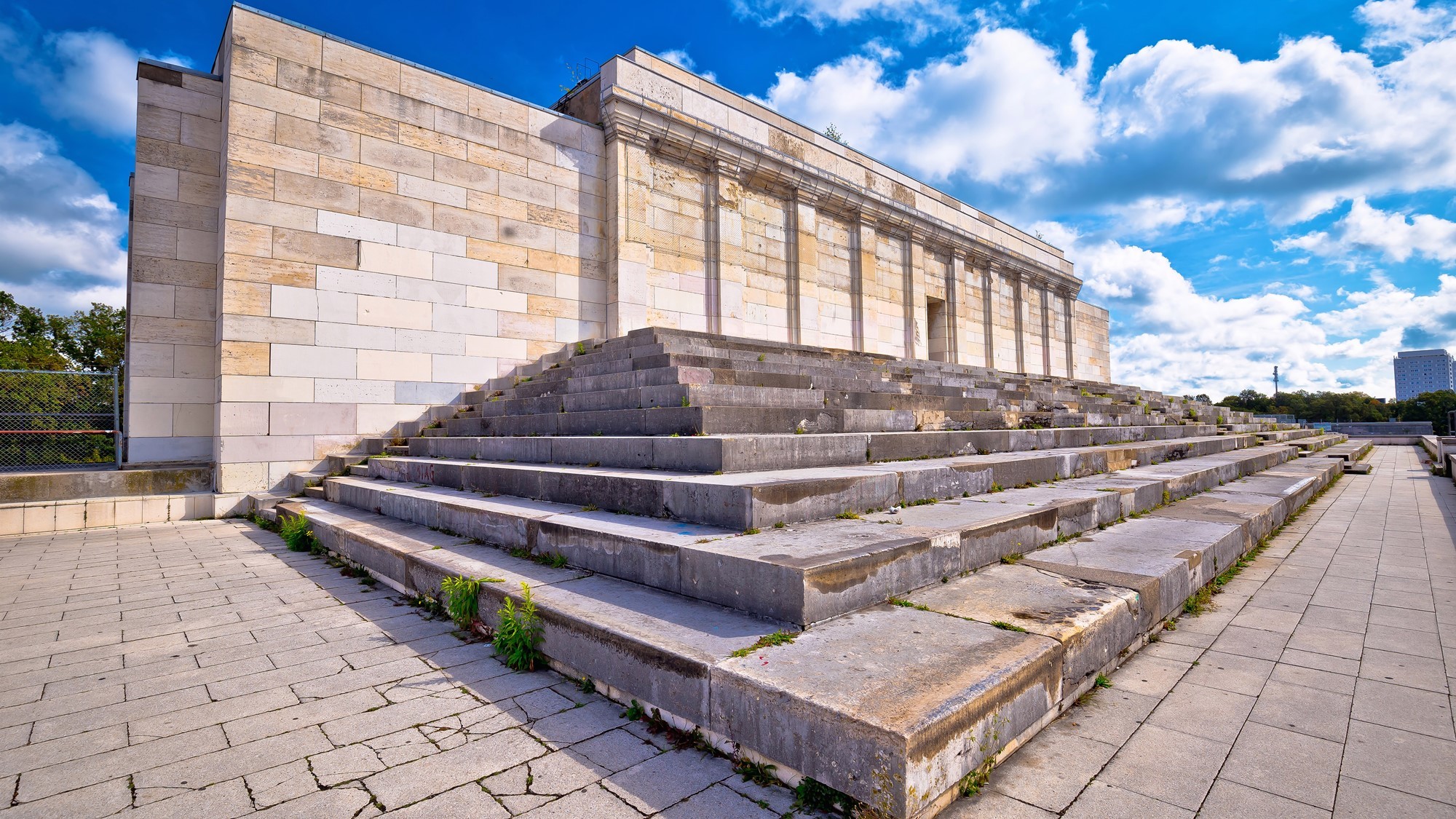
In the north wing of the unfinished Nazi Congress Hall is the Documentation Centre, a museum that explores the history of the National Socialist’s part rallies held in Nuremberg from 1933 to 1938. The exhibition “Fascination and Terror”, which opened in 2001, closed at the end of 2020 and a new permanent exhibition is currently being constructed. While the Documentation Centre is undergoing refurbishment an interim exhibition has been staged: “Nuremberg – Site of the Nazi Party Rallies”. The remodelled museum is expected to open in 2025.

Dokumentation Obersalzberg

Close to the Austrian border, Dokumentation Obersalzberg is a museum that re-opened in 2023 to tell the story of the use of the mountainside retreat on Obersalzberg in the Berchtesgaden Alps by Adolf Hitler and the Nazi regime. Hitler spent more than a quarter of his time at his home Berghof. The location was used to send out a positive image of an affable ‘People’s Chancellor’. But it was here that decisions about the war and genocide were made with Hitler’s inner circle.

Finsterau Open-Air Museum

One of the two Lower Bavarian Open-Air Museums that are administered as a pair (the other being Massing Open-Air Museum), that at Finsterau preserves a range of historic buildings from the Bavarian forest. As well as several farmsteads, the museum also has a smithy, a chapel, and an inn. Various farm animals add to the traditional/historic atmosphere. The museum also has a café and regularly hosts temporary exhibitions.

Germanisches Nationalmuseum, Nuremberg

With 26 different collection areas, all represented in the permanent display, this is the largest museum of culture history in the German speaking region. Displays range from early Stone Age artefacts to the art of 20th century – with an impressive set of the so-called ‘degenerate artists’. There are an estimated 25,000 artefacts on permanent display. Some of these are of international significance. For example, the Behaim Globe made in 1492 is the oldest surviving terrestrial globe in the world. Other objects of note include the Bronze Age gold cone from Ezelsdorf-Buch and the exquisite Roman parade helmet found in Middle Franconia.

Glyptothek, Munich

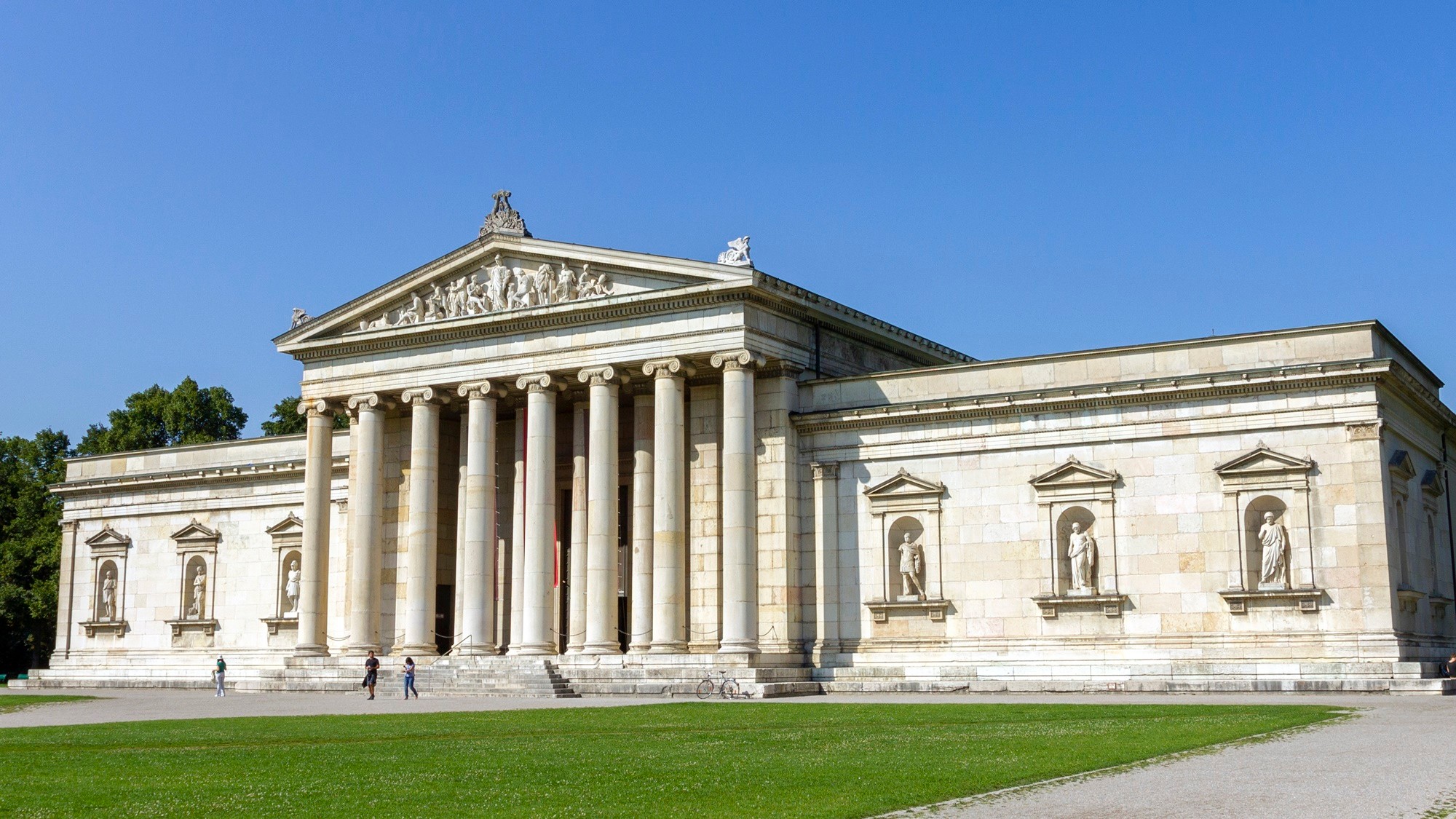
Built for Ludwig I, the Glyptothek housed the Bavarian king’s collection of Greek and Roman sculpture, and is Munich’s oldest public museum (opened in 1830). Outstanding pieces of Greek and Roman marble statues are displayed in galleries modelled on a Roman bath house, with bare brick walls and high vaulted ceilings. The objects range in date from the from the archaic age at 650 BC to the end of the Roman era around 550 AD. Highlights include the Barberini Faun and the temple figures from Aegina.

Create Your Bavarian Itinerary & Travel Lists