Find Expert Guides • Plan a Personal Trip • Explore Our Pasts Consciously

Hesse
Art, History & Archaeology Sites & Museums

Located in western Germany, the state is known for its many archaeological and historical sites and rich cultural traditions. These include such impressive archaeology attractions as the Celtic Oppidum at Glauberg and the Roman settlement of Saalburg. The state is also home to a number of museums and cultural institutions, including the Museum of Prehistory and the Museum of Natural History in Frankfurt. Hesse is known for its beautiful landscapes and outdoor recreation opportunities, such as hiking and cycling in the Taunus Mountains or enjoying the scenic beauty of the Rhine Valley. Additionally, there are many lively cities and towns that offer a wide range of cultural events and activities, such as theatre, music and festivals.

Archaeology & History Sites

Braunfels Castle

At the top of a basalt hill, with spectacular views over the town and surrounding area, the towers and walls of Braunfels castle look straight out of a fairy tale. What started as a fortified residence (the foundations of which are still preserved) in the 13th century developed into a striking Baroque residence of the 17th and 18th century. The castle served as the residence and the seat of government for the counts and princes of Solms-Braunfels. And has been in the family for close on 800 years. The same family live there today, organising guided tours for visitors. The museum can be visited without a guide.

Darmstadt City Wall

At a number of points in the historic city of Darmstadt sections of the medieval wall survive. The first wall, featuring square watchtowers, was built in 1330. Construction on the outer wall, with circular towers, was carried out in the 15th century. Only one watchtower survives, the Hinkelsturm – now housing the Altstadtmuseum. One section has been incorporated into the building of the Science and Congress Centre – the medieval wall makes a striking contrast to the glass façade.

Felsenmeer (Roman Quarry)

The Felsenmeer, literally, sea of rocks, is a large boulder field made up of massive dark grey quartz dolerite rocks. Spectacular from a geological point of view, the feature is a designated geotope in the the UNESCO Geopark/Geo-Nature Park Bergstraße-Odenwald. The rocks were used as a source of stone material by the Romans, and stonemasons ever since. There are a number of rocks that bear the marks of Roman stonemasons. But the most impressive artefact is a fully hewn column 9.3 m long. It is thought this column was intended for Constantine the Great’s church complex at Trier.

Haselburg Roman Villa

Built during the reign of Hadrian in 130 AD, Haselburg is one of the largest and most extensively excavated Roman estates in the state of Hesse. Reconstructed foundations allow visitors to see the floorplan of the villa, sections of the perimeter wall, a gate and a sanctuary dedicated to Jupiter. Although known about since the 19th century, the ruins were fully excavated in 1979 during the laying of gas pipelines. The large and spacious rural complex suggests it was owned by a member of the provincial upper class. The site is free to explore throughout the year, with the information centre open in the afternoons on weekends only between April and October. Well worth a visit.

Lichtenberg Castle

With a commanding position on a wooded hilltop, Lichtenberg Castle has spectacular views over the Fischbach Valley. Built in 1570, this was the first Renaissance castle in southern Hesse. Then it served as the summer residence for the landgraves of Darmstadt. Now at the centre of the UNESCO Bergstraße-Odenwald Geopark, the castle is home to an environmental museum, exploring the history of agriculture in the area and the Odenwald landscape.  The castle is a stop on a number of history and geography hiking trails. Guided tours of the castle are available.

Münzenberg Castle Ruins

Built in the 12th century to secure imperial rule in the Wetterau region by the Hohenstaufen dynasty. This was a noble family that from the 11th to the 13th century rose to rule in Holy Roman Empire. Today it is one of the best preserved Romanesque castles in Germany. Known locally as the ‘Wetterau Inkwell’ because of the two, distinctive and well preserved round towers that stand at either end of the inner ward. The tallest being 29 metres high. Round towers like these are common for the time and area, but usually only one.

Point Alpha Memorial

Said to be one of the most critical spots in the Cold War. This is  the point where US Armed Forces and the the Warsaw Pact faced each other for four decades over the East-West boundary, on what is the border between Hessen and Thuringia. Visitors can explore the entire complex by themselves, including the US  Camp, the House on the Border, border fortifications and reconstructions, the Patrol Road/Road of Hope and the Wiesenfeld Tower. Guided tours of the memorial site are available, and can be booked on the website.

Residential Palace Darmstadt

The Residenzschloss Darmstadt was the residence and administrative centre of the landgraves and dukes of Hesse-Darmstadt. The palace complex we see today, home to the local technical university, is made up of both Renaissance and Baroque architecture. The original castle, of which nothing remains, was constructed here in the 13th century. The church and bell buildings now house the Schlossmuseum, with portraits, furniture and handicraft, the collection explores four centuries of royal history of the House of Hesse.

Rollwald Concentration Camp Memorial

From March 1944 the memorial park served as the cemetery for Camp Rollwald, one of three prison camps in Rodgau. The camp was built in 1938, in which some 200 people died as a result of the appalling conditions in which they were kept.  It is thought the cemetery held 110 bodies. Following the war the graves were largely neglected, until the memorial park was established in 1983. There are detailed, illustrated information panels (in German, French and English) that outline all aspects of the camp’s history.

Saalburg Roman Fort

The Roman fort of Saalburg, also Römerkastell Saalburg, was a frontier fortification on the Upper German Limes just northwest of Bad Homburg, Hesse. The earliest excavations were carried out in the 1850s. In 1897 Kaiser Wilhelm II ordered a reconstruction of the fort, the result a near complete reconstruction of a Roman fort. Displays in the buildings use artefacts from the fort to give an idea of life in Roman times here. There are also artefacts from nearby sites such as the exquisite gilded bronze head of a horse from Waldgrimes.

The World of the Celts in Glauberg

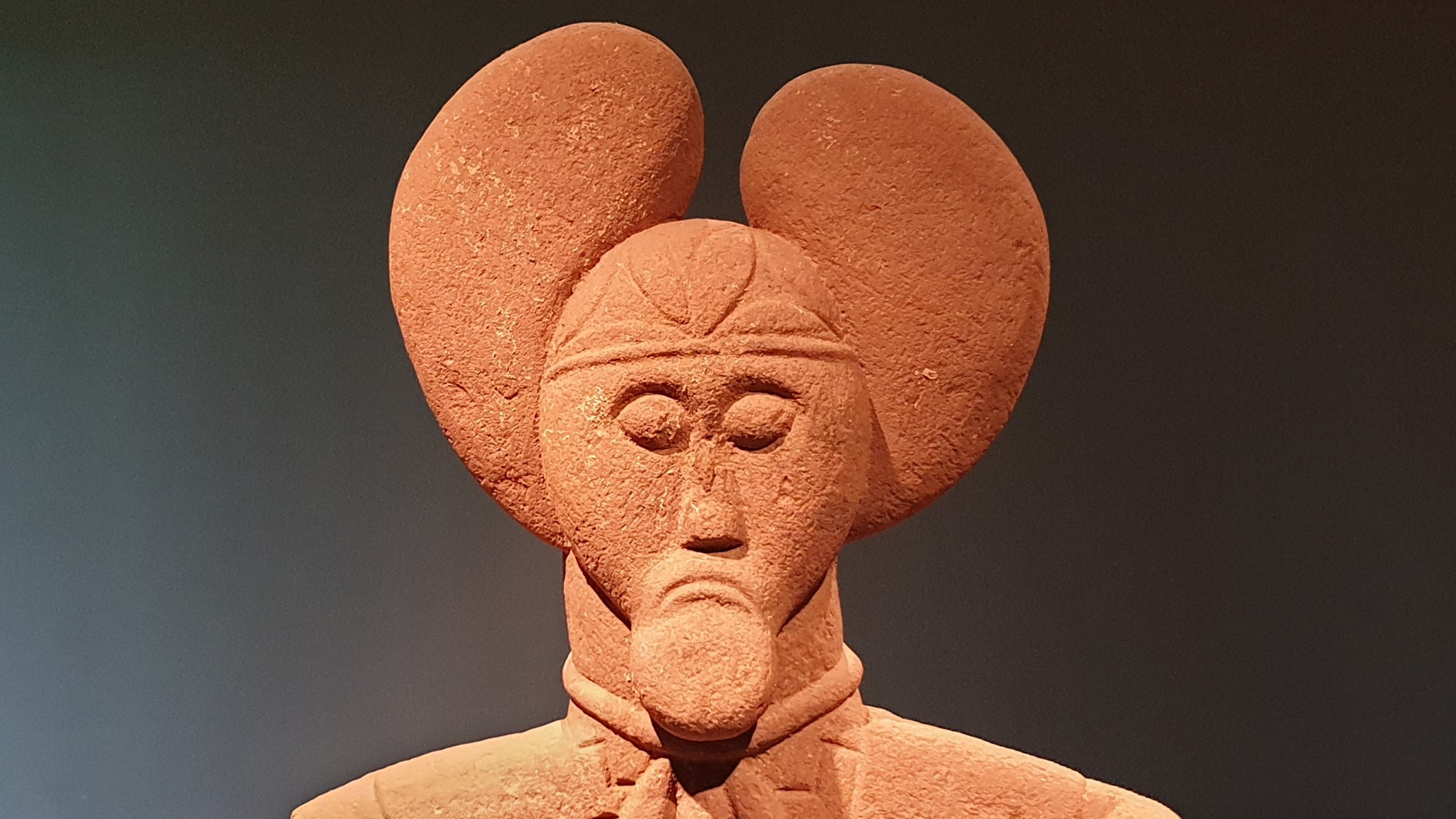
At the southern tip of the Glauberg archaeologists have excavated and reconstructed an Iron Age burial mound that is associated with a system of ditches and banks. Besides recovering graves with high status objects, the most remarkable find was an intact life size sandstone statue, and the remains of at least thee more. These are unique in Celtic archaeology. An onsite museum presents the extraordinary archaeology from the site. The site is located in an archaeological park. A route through the park allows visitors to see Iron Age fortifications.

Wamboltsches Roman Villa

Deep in a forest in northern Odenwald, above the town of Sandbach, are the remains of a Roman settlement. Long been known as Wamboltsches Schlösschen (Wambolt’s little castle), the ruins were thought to be those of the ancestral castle of the Wambolt family of Umstadt. Excavations in the 1870s, however, revealed their Roman age – but little else. The site is overgrown, and the informative panels are decaying. There is little to see that warrants the 40 minute walk from the nearest car park. Some of the walls have been reconstructed, but there is little understanding as to what they were were walls of.

Wilhelmsthal Palace

Commissioned as a summer residence and hunting lodge by Landgrave William VIII. It was built between 1743 and 1761, and is today one of the most important and beautiful surviving Rococo palaces in Germany. Most of the rooms are in the Rococo style, and have survived unchanged. Besides the French made furnishings, the palace is also known for its collection of paintings by Johann Heinrich Tischbein the Elder. The Rococo Park, incomplete, includes a grotto and canal. The castle park is open to all, and free, year round. It is only possible to visit the palace’s interior on a guided tour, which are offered daily.

Museums & Art Galleries

Darmstadt State Museum of Hesse

With a collection of around 1.35 million objects, ranging from fossils to German expressionist paintings, the museum styles itself as “the whole world under one roof”. Founded in 1820 with the art and natural history collections of the Landgraves of Hesse-Darmstadt, this is one of the oldest public museums in Germany. Highlights include a mastodon skeleton from America, the Magdeburg Ivories, a Roman mosaic depicting Oceanus, Gothic armour and a strong collection of art including Pieter Brueghel, Rembrandt, Alberto Giacometti and Barbara Hepworth

Hessenpark Open-Air Museum

The state government of Hesse launched the Hessenpark Open-Air Museum in 1974 as a means of protecting and showcasing various historical buildings in their care. There are nearly 100 historic buildings in the open-air museum, including residential structures, windmills, a water-mill, a bakery, a village school, a blacksmiths’ workshop, a church and a synagogue, many set out in the style of an early 20th century town. Various special events take place throughout the year.

Wilhelmshöhe Palace

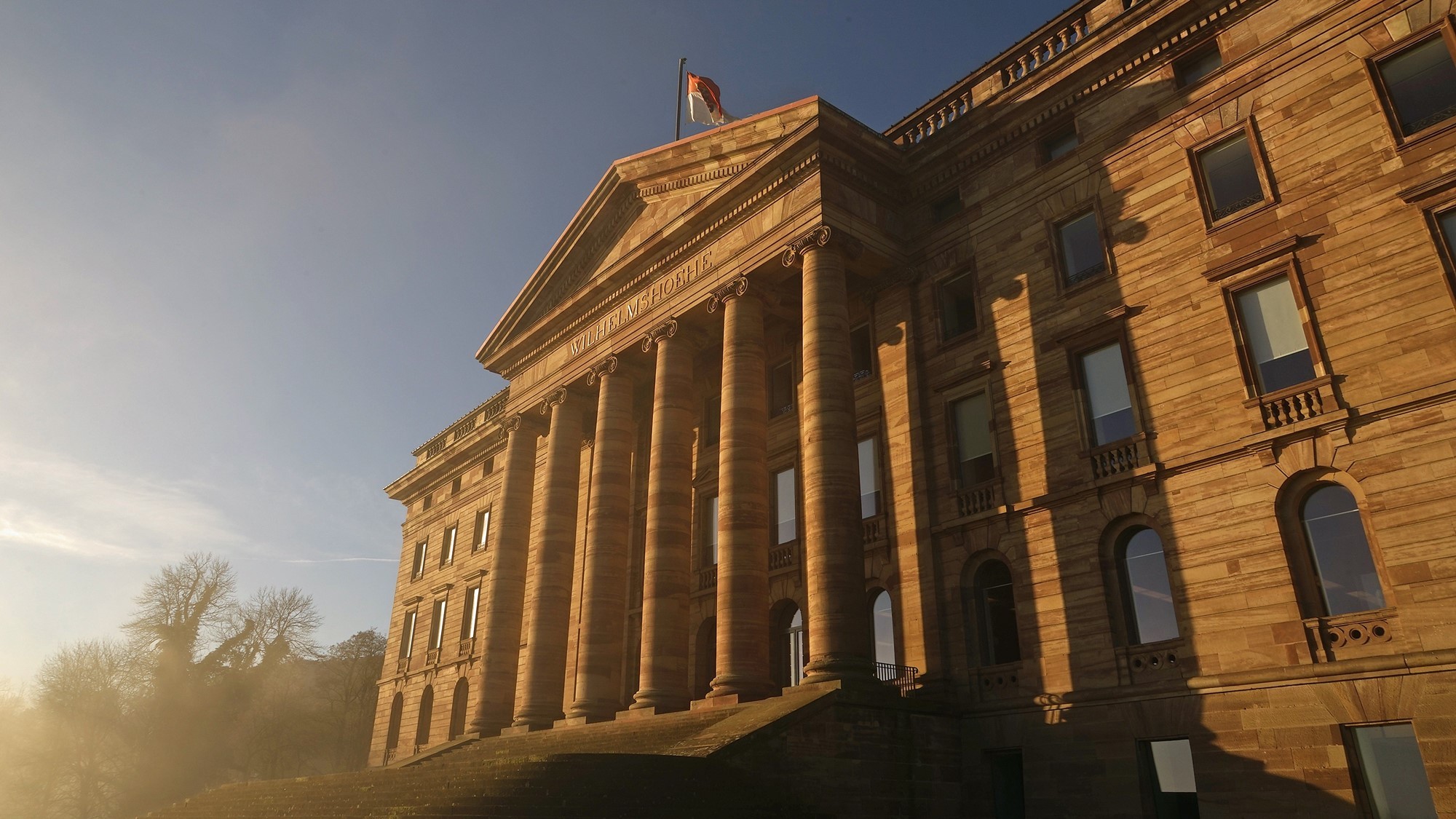
The 18th century Neoclassical palace was built for Landgrave Wilhelm IX of Hesse. It replaced an earlier 17th century, which itself replaced an earlier castle that had been fashioned out of a 12th century monastery. Today the palace houses an Old Masters Gallery, a collection of Egyptian, Greek and Roman antiquities, and a collection of over 60,000 prints and drawings. The palace is part of the Bergpark Wilhelmshöhe UNESCO World Heritage site.

Create Your Own Itinerary & Travel Lists