Puglia
Art, History & Archaeology Sites & Museums
Apulia, Puglia in Italian, is made up of the heel of the boot of Italy, or the Salento peninsular, and stretching further inland up the east coast of Italy. An arid area, with only a few torrential rivers, it is the least mountainous region in Italy. But, it is one of the richest archaeological areas in the country; the region has three UNESCO World Heritage Sites. The Provinces in Puglia are: Bari, Barletta-Andria-Trani, Brindisi, Foggia, Lecce and Taranto.
Archaeology & History Sites in Puglia
Alberobello Monumental Cemetery
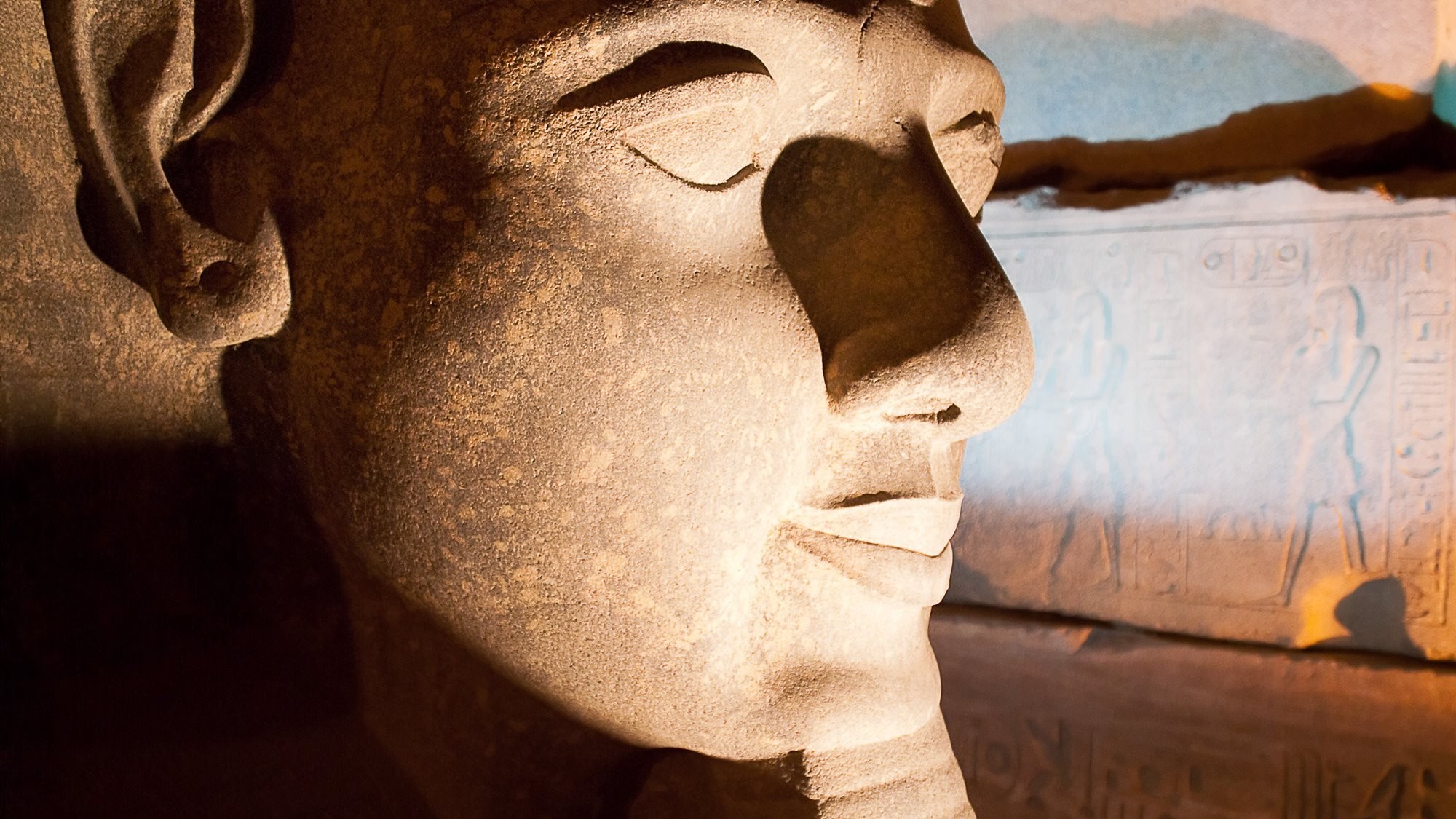
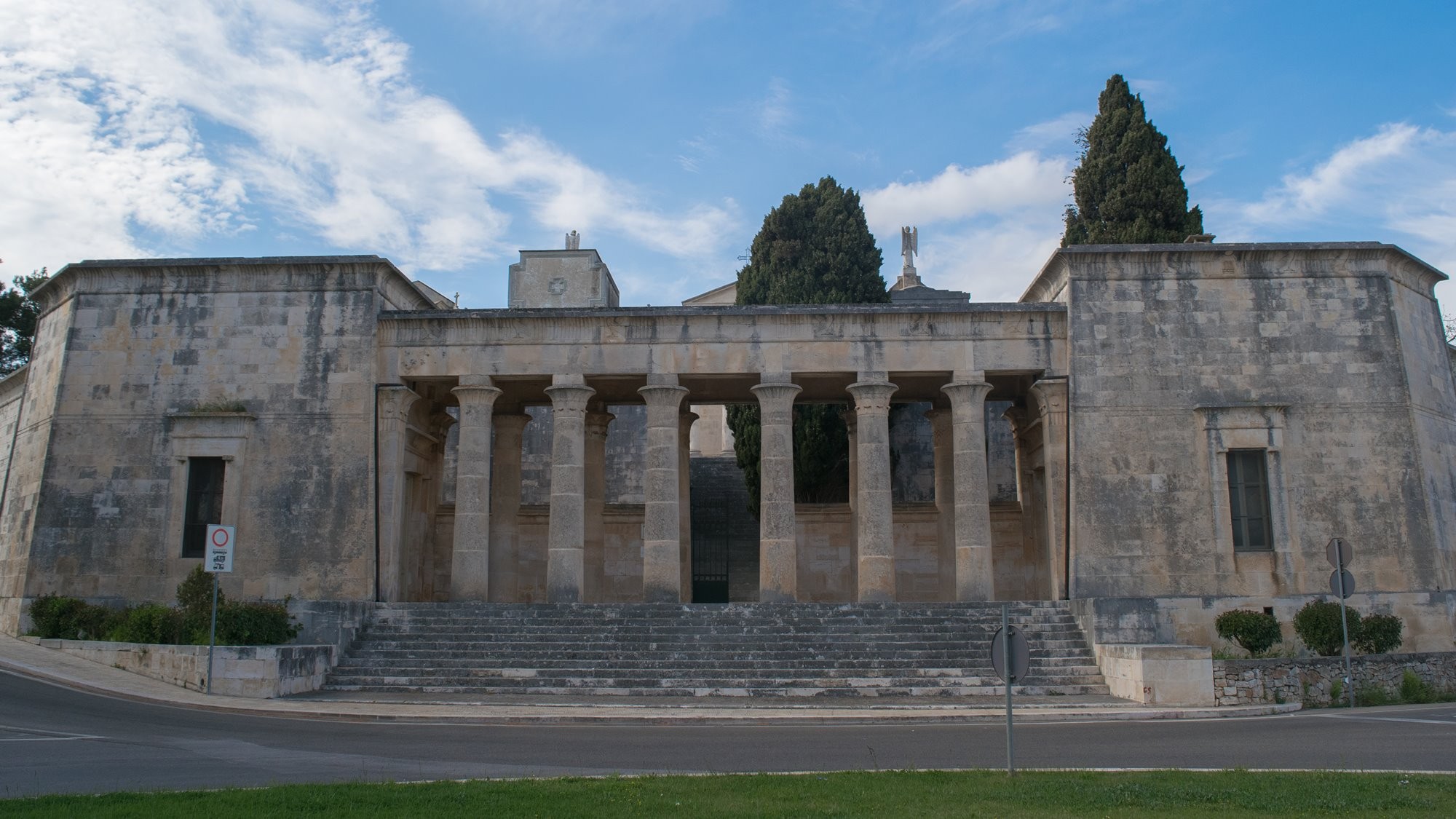
Built in 1887, the monumental entrance to the city of Alberobello’s cemetery was inspired by funerary architecture of ancient Egypt. What you see today, however, is only a portion of what was planned. Lack of funds prevented the ambitious project being completed. The entrance hall with its 12 columns, the capitals given a typical ancient look of lotus flowers, are flanked by two chapels. Various architectural features are highly decorated with ancient Egyptian iconography.

Archaeological Park of Egnazia
Egnazia is a large, multi-period site that has evidence of continuous human occupation from the Bronze Age to the early Christian era in Medieval times. Although known about for its extraordinary archaeology since the mid 16th century, it was systematically excavated during the 20th century. As a result of this work, many features of the various periods of habitation have been left exposed, and an excellent, well signposted trail set up for visitors to easily understand this amazing site.

Castel del Monte
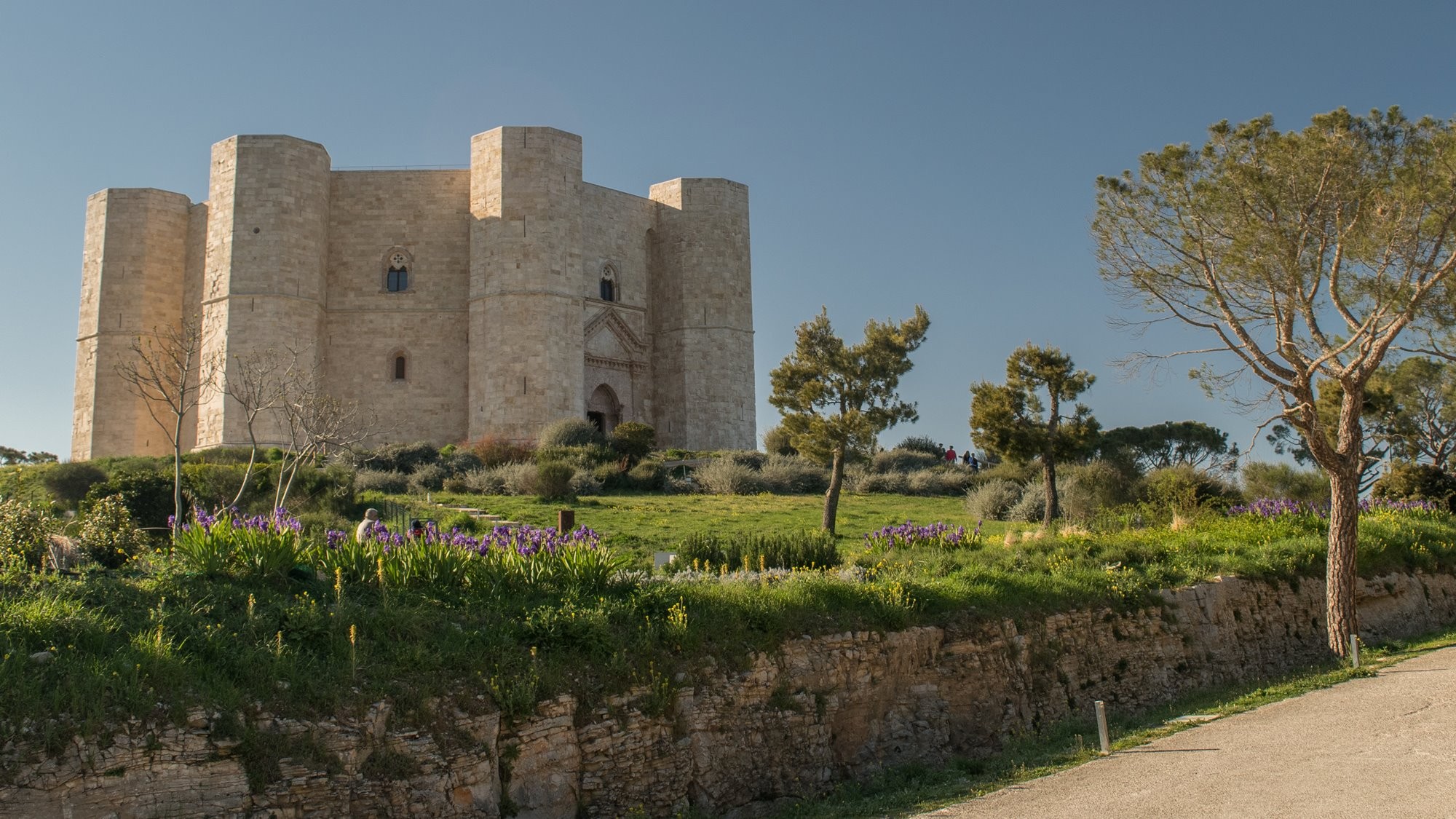
Castel del Monte, or ‘Castle of the Mountain’, with its wall of 25 metres high was once part of a more elaborate citadel built by Emperor Frederick II in the mid 13th century. That curtain wall has not survived and all that remains is an octagonal castle 56 metres in diameter, with eight octagonal towers. Often described as one of Frederick’s more fascinating castles – with a unique blend of Classical and Islamic features, it was added to the UNESCO list of World Heritage Sites in 1996 and appears on the Italian one-cent euro coin.

Chianca Dolmen
This Bronze Age dolmen was first discovered by archaeologists in 1909, and excavated the following year. Although much of the earth that once covered the standing stones had long since disappeared from the dolmen, archaeologists did find a rich archaeological deposit. Besides remains of ceramic vessels, stone knives and animal bones, the remains of at least 6 individuals had been scattered about within the burial chamber. Two humans were found in a foetal position.

Chiesa d'Ognissanti - Church of All Saints
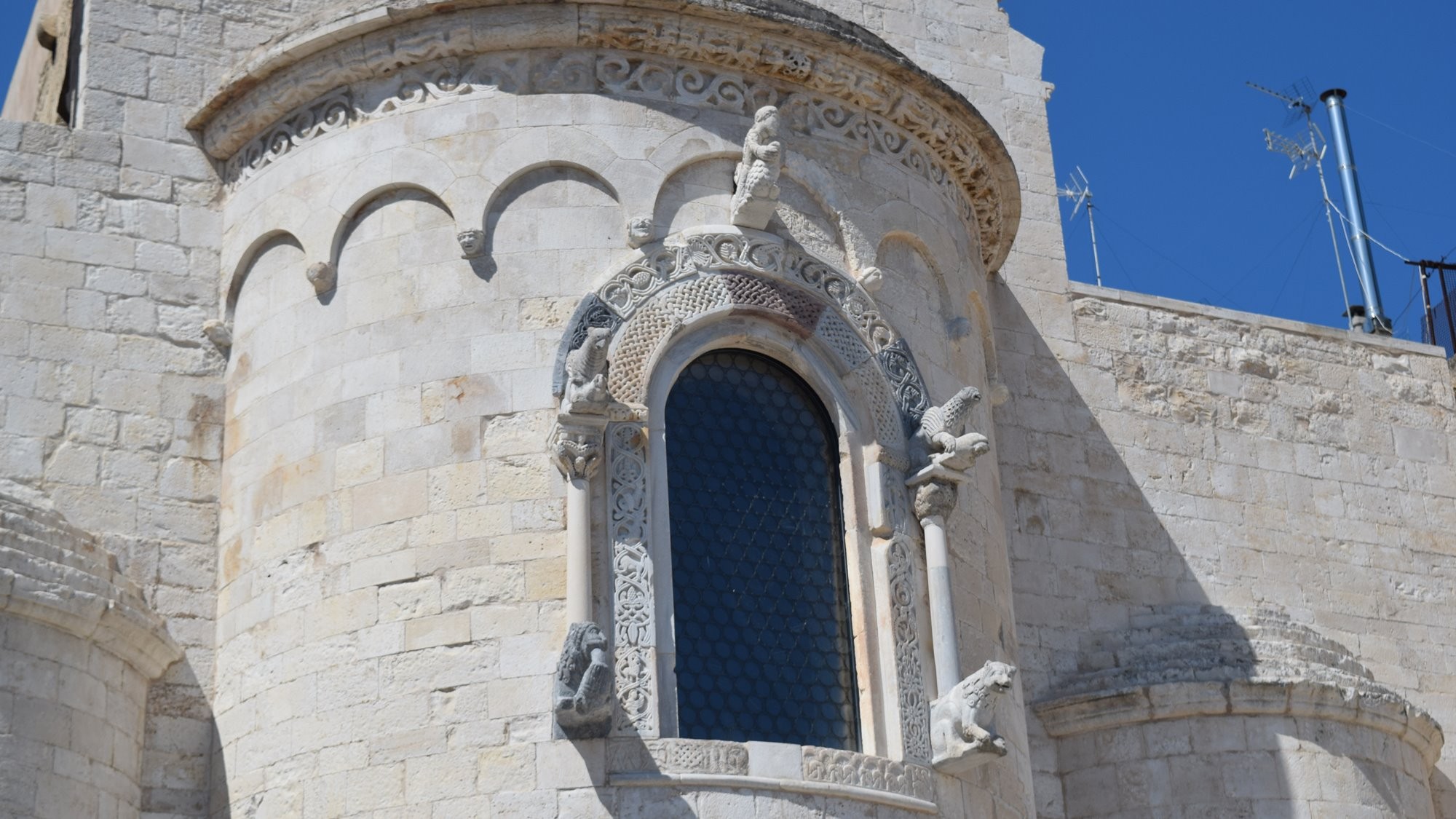
Various documents suggest that he church was founded in the 12th century. But the Romanesque sculptural elements for which the church is well known, are thought to have been added in the following century. The church has been associated with the Templars, thought to have been built inside their hospital, despite well established evidence that the Templars were in Trani, there is no evidence that they built this church. The church was, however, a place of blessing for Crusaders departing Trani for the Holy Land.

Ginosa Castle
Built on the end of a spur of land formed by a u-bend in the ravine for which Ginosa is well known, this 11th century Norman castle still commands a prominent position. The castle was built in 1080 by Robert Guiscard, from Normandy, who played a significant role in the Norman conquest of southern Italy. The strategic location ensured the town was protected against Saracens raids. Many of the Norman features have been removed during subsequent renovations. The drawbridge was replaced by an arched bridge linking the castle to the historical part of town.


Montalbano Dolmen
Just outside the small town of Montalbano, this Neolithic dolmen is also known as ‘Tavola dei Paladini’ – or the table of champions. Like megalithic monuments elsewhere in Europe, dolmens in Puglia are also associated with local folklore traditions. In this case, having been made by giants in a challenge to see who could lift the biggest stone. Despite suffering damage at some point in the recent past, this particular dolmen is a good example of funerary structures built around 5,000 years ago.

Norman Swabian Castle of Gioia del Colle
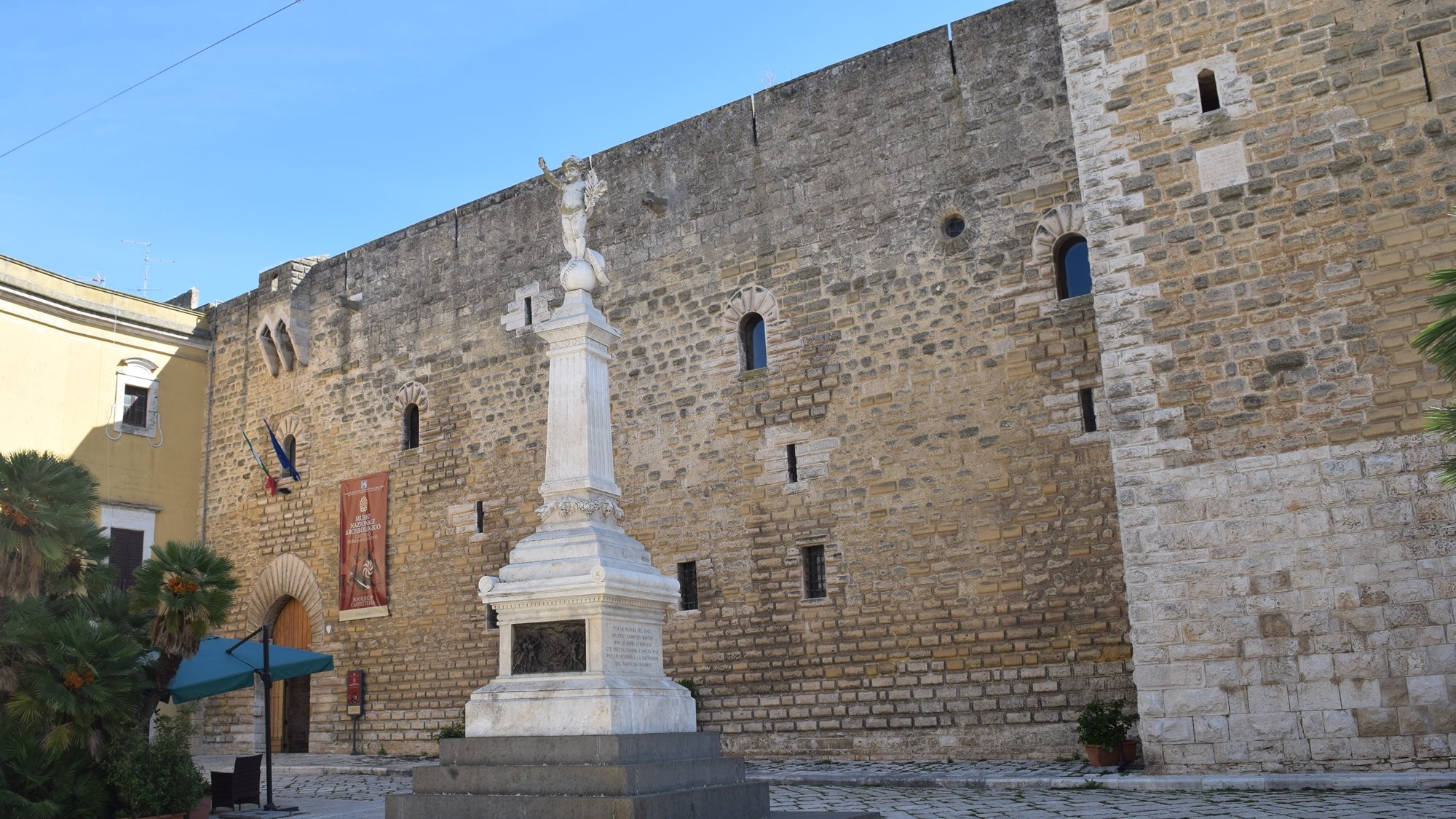
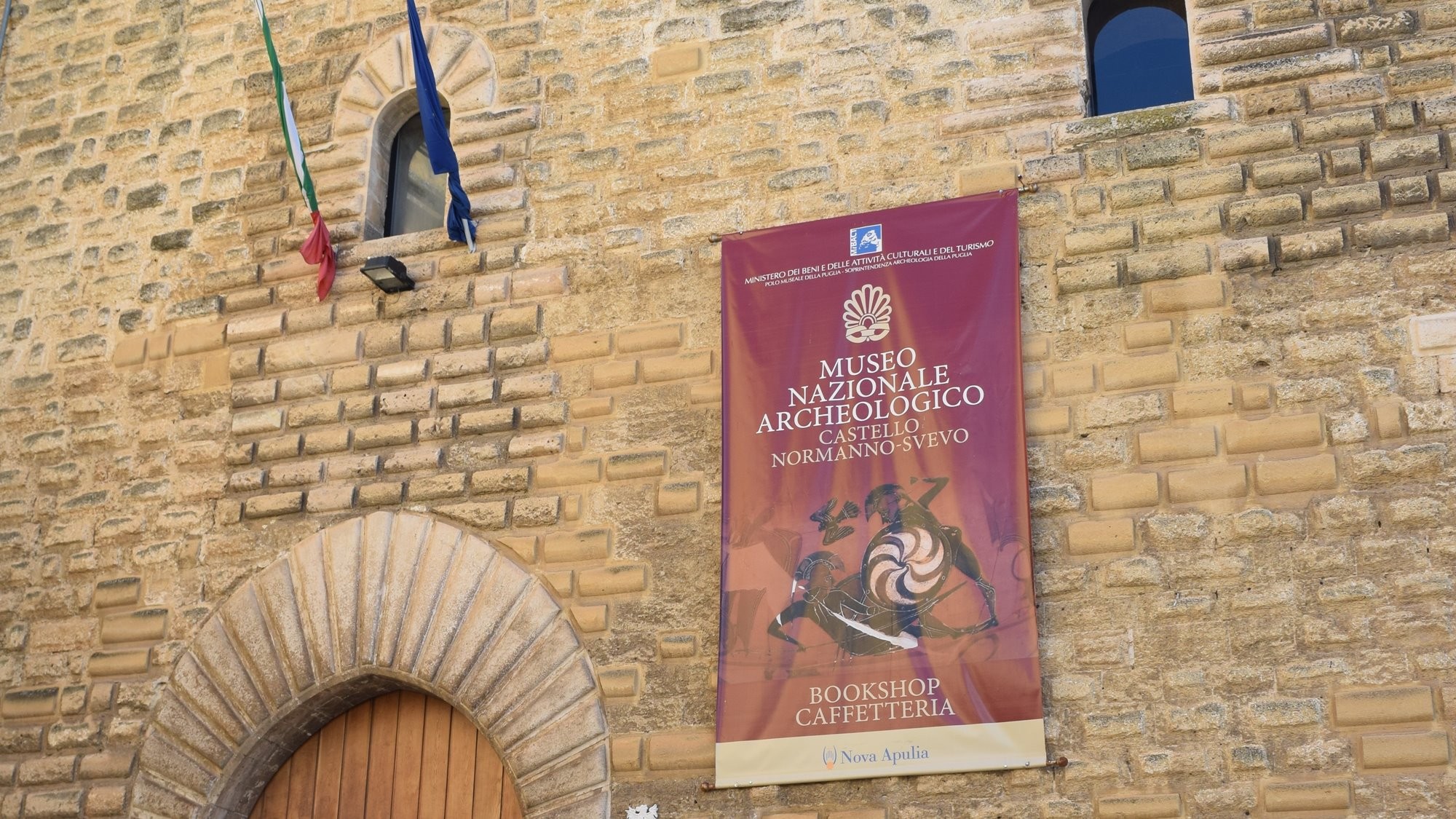
The imposing castle in the historic centre of the town was built for defence by Frederick II, Holy Roman Emperor, on his return from the Fourth Crusade to the Holy Land. It is typical of his style: a roughly quadrangular structure, impressive curtain walls surrounding an inner inner courtyard and imposing corner towers. Despite alterations of the following centuries, as Puglia changed hands, the interior is well preserved and includes the throne room. Today the castle houses a National Archaeological Museum; entry to both the castle and the museum only requires one ticket.

Otranto Cathedral
Built on the remains of an earlier Christian church and a Roman house, the Cattedrale di Santa Maria Annunziata was founded by a Norman Bishop in 1068, and consecrated in 1088. At over 1,000 years old there are a number of fascinating features to see, in particular the 12th century mosaic, which covers the entire floor of the nave and apse, and the relics of Martyrs of Otranto. Fragmentary frescoes have survived in the crypt, in which many of the supporting columns make use of Greek and Roman columns.

Trulli of Alberobello
Trulli are buildings with a cone shaped roof that are built using local limestone rock without the aid of any mortar. They are particularly common in the Itria Valley of Puglia, but it is the town of Alberobello with its streets of trulli that was added to the UNESCO list of World Heritage Sites in 1996. In this area they can also be seen in a more rural setting, either singly or in groups of as many as five. Walk around the town and admire the different examples, the symbols on the roofs, or even stay the night in one.

Museums & Art Galleries in Puglia
National Archaeological Museum of Egnazia
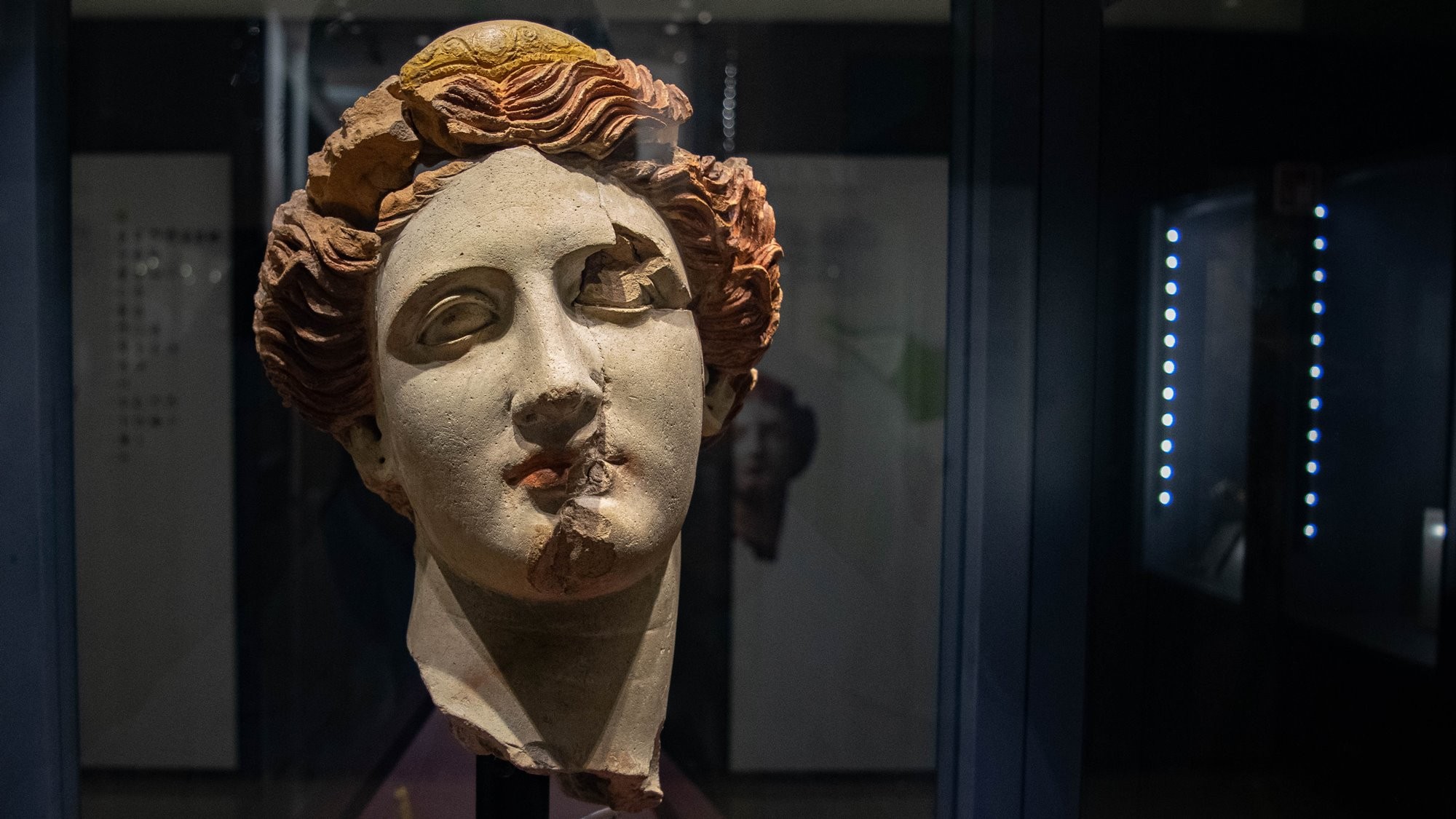
Near the archaeological site of Egnazia is the Museo Nazionale Archeologico di Egnazia. Following substantial redevelopment, the museum re-opened to the public in 2013. Thirteen well designed and highly informative galleries with the best artefacts spanning the 3,000 years of Egnazia’s past, from the Bronze Age settlement, the Messapian and Roman cities, to the episcopal settlement of the early Christian era. A ticket to the museum includes entry to the site.

National Archaeological Museum of Gioia del Colle
Housed in a Norman-Swabian castle, the archaeology museum was established in in 1977 to display the artefacts recovered during excavations of the ancient town of Monte Sannace. This collection has since been joined by artefacts from other sites in the region. The collection is know for the domestic and funerary vessels, ref-figure ceramics typical of those associated with Magna Grecia. As well as ceramics of indigenous Peucetian communities. One highlight of this collection is a 4th century Apulian krater.

National Archaeology Museum of Taranto
Founded in the 19th century, with a major renovation ending in 2016, the Museo Archeologico Nazionale di Taranto is one of the finest national museums in Italy. Beautifully displayed is an astonishing collection of artefacts, from Palaeolithic figurines found in nearby caves to numerous artefacts from the Roman period of the area. For anyone interested in the subject of Magna Grecia, and the colonisation of Italy by the Greeks, the collection of Apulian ceramics is truly spectacular and will not disappoint!


Salvatore Faldetta Archaeological Museum
In an unassuming building next to the Spanish Steps Virgilio, but with wonderful views over the harbour, the museum showcases the archaeology of the area in an around the city of Brindisi. Founded in October 2002 by Salvatore Faldetta the collection has around 350 objects, which are displayed on three floors. These artefacts tell the story of a city with a rich and complex past, owing to its position on a natural port and often called the ‘gateway to the east’.