Travel Guides by Experienced Archaeologists & Historians

World War II & Holocaust Sites in the Netherlands
Battlefields & Deportation Sites, Memorials & Museums

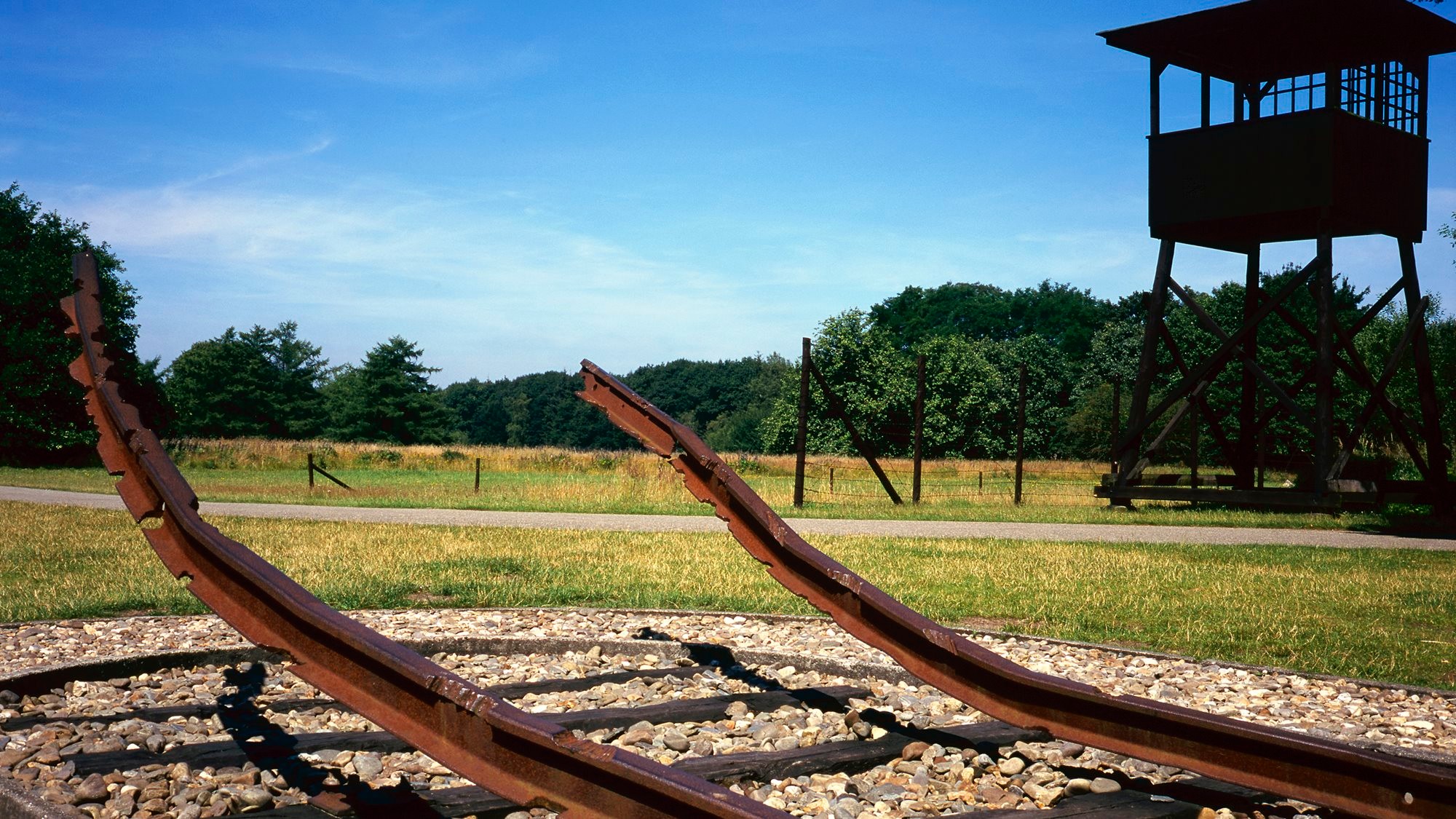
From the Westerbork transit camp, from which over 100,000 Jews were deported, to the 4,000 plus war cemeteries dotted across the country, the landscape is noticeably marked by the tragic events of WWII. Memorials of all types stand as sombre reminders of persecution and execution, strength and courage of millions. Themes of occupation, deportation, resistance and liberation are explored in museums and exhibitions, telling the stories of Dutch experience from the initial invasion in May 1940 to the final liberation on 5 May 1945.

Despite declaring neutrality at the outset of the war, the Netherlands was invaded by Nazi Germany on 10 May 1940. Four days later the Dutch army was forced to surrender as a result of their defeat in the Rotterdam Blitz. The Dutch government and the Royal family moved to London. From the outset, the majority of Dutch Siniti, Roma and Jews were rounded up and sent to concentration camps in the east via such camps as Westerbork. Maastricht was the first Dutch city to be liberated, between 13 – 14 September 1944, following which Operation Market Garden was launched on 17 September. Although the operation succeeded in liberating cities such as Eindhoven and Nijmegen, it failed in its primary objective  to secure the bridge over the Rhine River at Arnhem. There followed harsh reprisals by the Nazis and an especially harsh winter, from which many thousands died of starvation. Relief finally came in April 1945 when the Allied forces crossed the Rhine River in Operation Plunder, beginning 23 March 1945.

For a more detailed history of the war in the Netherlands, Nina Siegal’s The Diary Keepers: World War II in the Netherlands, as Written by the People Who Lived Through It, is a riveting read based on over 2,000 Dutch diaries written during World War II.

Thought-Provoking WWII Sites & Memorials to Visit in the Netherlands

Anne Frank House

The Anne Frank House offers insight into one of the more harrowing chapters of modern history. This is where the Frank family and four others hid from persecution during the Nazi occupation of the Netherlands. After they were discovered, they were sent to extermination camps, where Anne was killed. Her diary was posthumously published in 1947, with the House opening in 1960. Although queues to see the space where the young author scripted her famous journal tend to be long, it is an altogether unique experience.

Anne Frank Sculpture - Merwedeplein

From 1933 to 1942, Anne Frank’s family lived in an apartment overlooking Merwedeplein (Merwede Square) before they went into hiding. Although the apartment is owned by the Anne Frank House, it is not open to visitors. Follow the link to see 360° photographs of what the interior looks now, in its original style. A statue of Anne has been erected in Merwedeplein. Anne referred back to her time on the square, or “the Merry” as she called it.

Apeldoornsche Bosch Memorial Centre

Founded in 1909, by the time of occupation Apeldoornsche Bosch was a flourishing Jewish psychiatric institute. On 1 April 1942 all non-Jewish staff were fired, and on 21/22 January 1943 the facility was raided, and around 1,300 patients and staff were sent to Auschwitz. Only 21 employees survived. On 2 October 1944, the site was used for the execution of 6 resistance members and two Allied pilots they had been hiding. Today an onsite memorial centre charts the story from 1909 to the raid of 1943. While a self-guided walking leads visitors around 12 significant locations.

Atlantic Wall Centre - Huisduinen

The striking Neoclassical building constructed in 1942 was the administrative centre and German Naval Officers’ quarters during the German occupation of the Netherlands. Until 1992 the controversial building was used by both the Artillery of the Royal Army and the Royal Navy. Following a fire in 2009 it became a centre for learning about Den Helder and the Atlantic Wall. Interactive displays, original artefacts and eyewitness accounts tell the story of the Wadden Area during the war.

Bunkers at Burgh Haamstede

To the west of Burgh Haamstede are the remains of a vast and complex system of bunkers and underground shelters, interconnected by concrete tunnels. This was the command headquarters of the ‘Stützpunktgruppe Schouwen’. It was from here that operations over the entire Schouwen-Duiveland area were directed. The area played a crucial role in the final months of the war. In particular from 4 September until 8 November 1944 during the Battle for the Scheldt, when the Allies sought to take control of the route into Antwerp.

Camp Vught National Memorial

Opened in January 1943, Camp Vught, or Konzentrationslager Herzogenbusch, held around 33,000 prisoners from 36 countries. Records suggest 749 prisoners died in the camp – their bodies cremated in the onsite crematorium. Many prisoners were transferred to other camps before it was liberated by the Allies in September 1944. A permanent exhibition allows visitors to explore the history of the camp via personal stories. Barracks 1B is the last remaining barrack that was in use at the camp. After the liberation of the camp, it was used to house German soldiers and Dutch collaborators.

Casemates Museum

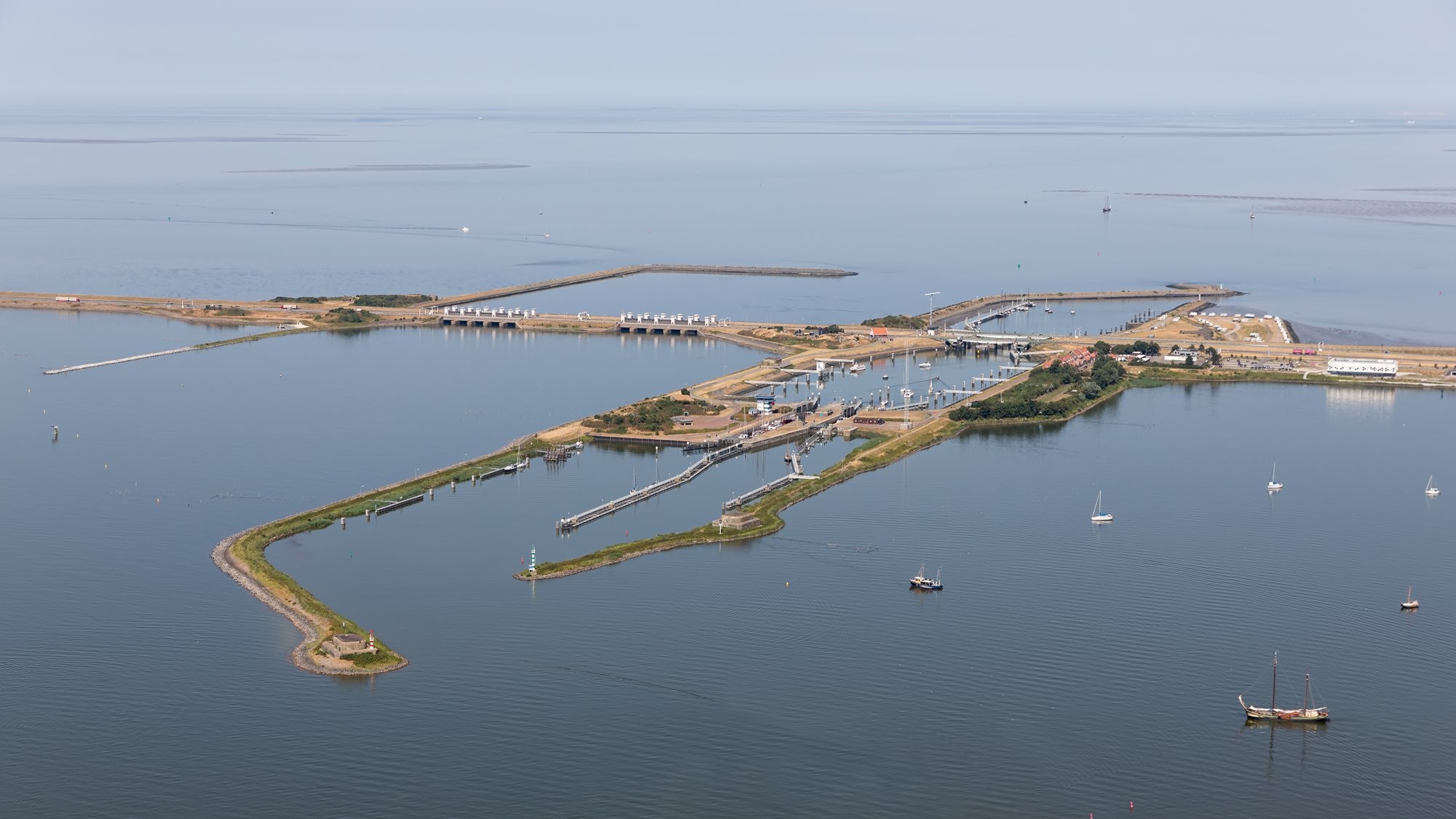
Still accessible by car or public transport, the Kazemattenmuseum (Casemates Museum) is situated on the afsluitdijk: the 32 kilometre long dam which separates the Zuiderzee from the North Sea. This dramatic landscape feature was the setting of one of the lesser known battles of World War II, the Battle of the Afsluitdijk in May 1940. Thanks to the casemates, another term for fortified gun emplacements, this was one the few places where the German Blitzkrieg was successfully halted. Visitors can learn more at the visitor’s centre before exploring the casemates themselves.

De Oversteek - The Crossing

The longest single arch bridge in Europe, De Oversteek (The Crossing) was built on the site of, and named after, the Waal crossing. On 20 September 1944, it was here that soldiers of the 504th Parachute Infantry led an assault across the river during Operation Market Garden. Each day at sunset a military veteran leads a march across the bridge to commemorate the historic event. At the pace of the march, the 48 street lights on the bridge are lit up one be one in honour of the 48 paratroopers who died during the assault in 1944.

De Punt Bunkers - Widerstandsnest 220 H

The WWII complex bunkers at De Punt, Widerstandsnest 220 H, were entirely covered by the shifting dunes. Although the delta island of Goeree-Overflakkee delta was not strategically important, it was an essential part of the Atlantic Wall. The clear trajectory for cannon fire towards the entrance of the Grevelingen between Goeree and Schouwen called for a heavy infantry post here. Thanks to the work of volunteers, the complex of 15 bunkers is once again visible, and accessible throughout the year, with tours offered on memorial days.


Freedom Museum

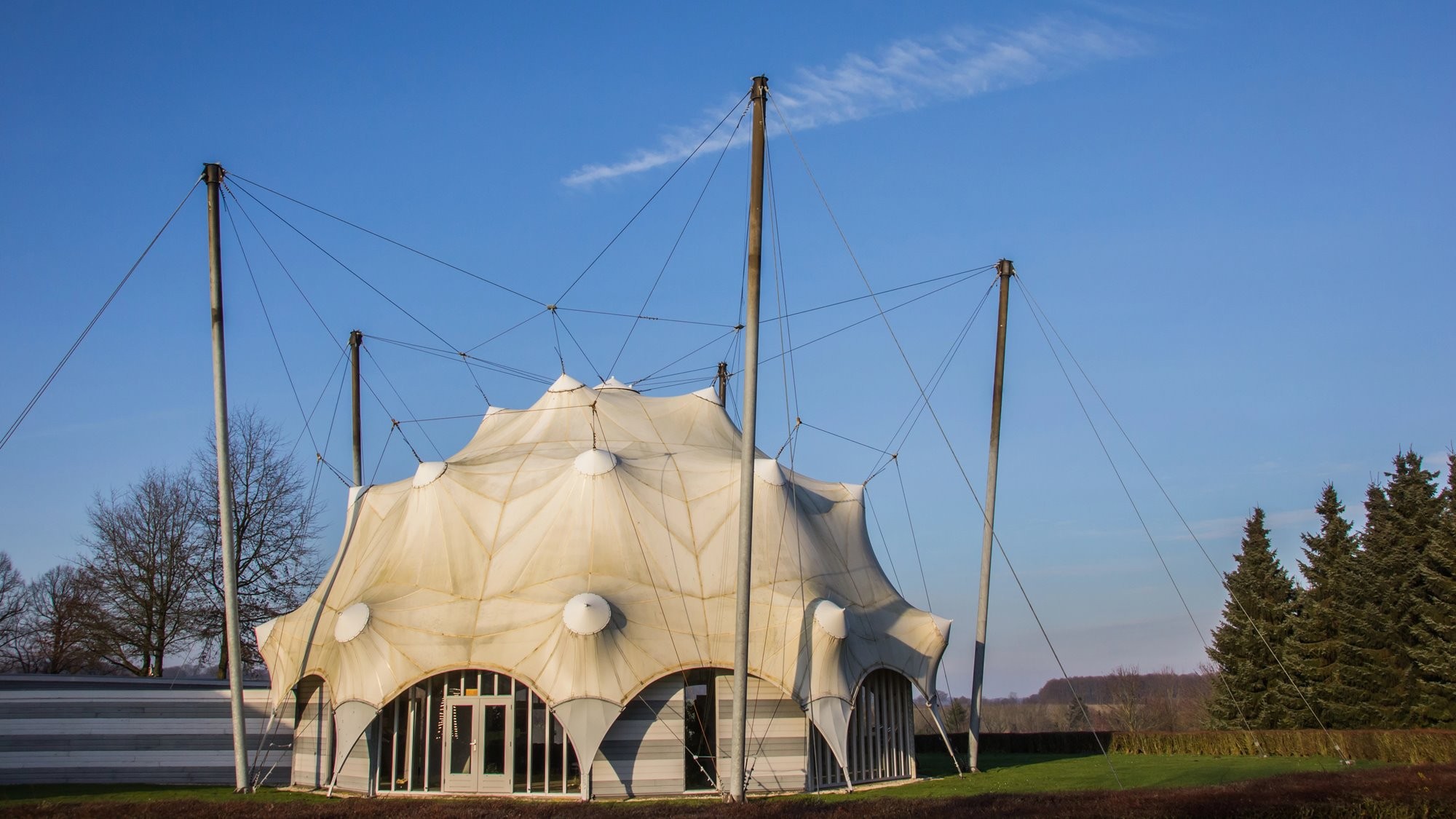
Inside a 12 m high dome, resembling the appearance of a parachute, the Freedom Museum explores the concept of war freedom with a focus on the Second World War. Besides the permanent exhibition, the museum also hosts temporary exhibitions on related themes. The museum is located in the area where two important operations on the Western Front took place in WW2, namely Market Garden and Veritable. A balcony in the museum allows visitors to view the historic landscape.

Grebbeberg Casemates

Grebbeberg is the southern end of what is known as the Grebbeline; a defensive line ending at Ijesselmeer, established in 1745 to defend the Netherlands. In 1939 various new trenches and casemates were constructed against a possible German invasion. The invasion started on 10 May 1940. The remains of many of these casemates, used by the Dutch during the Battle of Grebbeberg, 11 to 13 May, can be visited. The best preserved is SZW FR Kazemat-GLZ17, a casemate armed with machine guns, with 3 frontal loopholes.

Grebbeberg War Cemetery

A few kilometres east of Rhenen is the site of the Battle of Grebbeberg, which took place in early May 1940. The battle is named after the hill on which it was fought, and today the location of the cemetery for around 400 Dutch soldiers who died in that conflict defending their country against the German invasion. Dutch soldiers who died elsewhere in the Netherlands during May 1940, and then placed in isolated cemeteries, have since 1946 been reinterred here. There are now more 850 Dutch soldiers buried in the cemetery.

Groesbeek Canadian War Cemetery

With 2,617 soldiers buried in the Canadian War Cemetery near Groesbeek, it is the largest Commonwealth war cemetery in the Netherlands. The reason there are so many Canadians buried here (2,339) is because, with one exception, the Canadians who lost their lives in the Rhineland battles of Operation Veritable were either buried or re-buried here. The commander of Canadian forces in Europe ordered that no Canadian soldiers be buried in German soil. Soldiers from eight other countries are also buried here.

Hotel De Wereld

Although there has been a hotel on the site since 1669, it is the current building of 1852 (restored in 1975 and 2004) that is of particular significance. Here, on 5 May 1945 Canadian General Foulkes met German Colonel General Blaskowitz in what is now called the Grote Capitulatiezaal to negotiate the German capitulation in the Netherlands. The pen used to sign the document is now in the Museum De Casteele Poort. Today, a 4* hotel, De Wereld is praised for its character and proximity to the sites of historical interest in the city of Wageningen.

Marine Flak Battery Fiemel

Termunten has long been recognised by various armies for its strategic importance, including the Germans in WWII. The battery at Fiemel was built in 1943 for the Stützpunkgruppe Delfzjilk. Made up of about 40 buildings, which included bunkers, barracks and foundations for artillery. Many of these were destroyed when the dyke was widened in the 1970s. A good place to start is at the nearby Groninger Landschap, where you can get an overview of this section of the Atlantic Wall, and follow a number of routes to see the various remains that still survive.

National Holocaust Names Memorial

Netherland’s national memorial for the Holocaust and Porajmos is located in the former Jewish quarter of Amsterdam. The memorial names the 102,000 Jewish and 220 Roma and Sinti victims who were arrested by the Nazis during the German occupation of the Netherlands and sent to their death in the Auschwitz and Sobibor death camps between 1940 and 1945. Visitors walk through a labyrinth of corridors made up of red bricks. On each brick is the name, date of birth and age at death of a victim.

National Military Museum

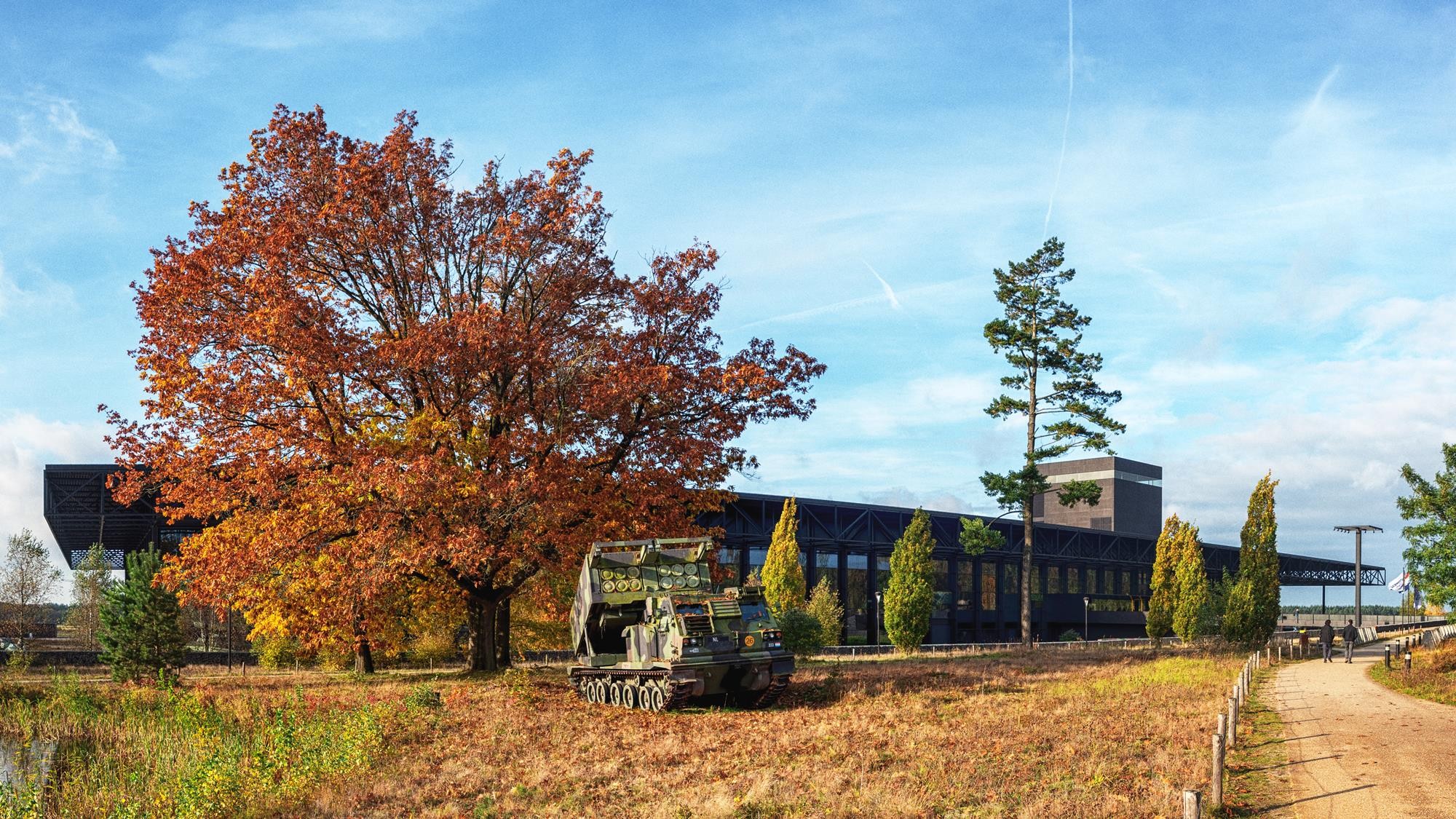
Occupying the former Soesterberg Air Base is the National Military Museum of the Netherlands. And with over 300,000 artefacts, ranging from flint arrow heads to modern fighter jets, this is the largest military collection in the country. Exhibition include five interactive themed galleries, 19 aircraft, and an exhibition exploring what life was like for school children during WWII. On show in The Treasury are numerous old paintings and many different types of classic weapons. There are also indoor and outdoor activities for children.

Netherlands American Cemetery and Memorial

The American cemetery in Margraten is the only American military cemetery in the Netherlands. In just over 65 hectares, 8288 American service men have been laid to rest. The names of a further 1722 soldiers who were never recovered are recorded on the walls of the Court of Honour at the entrance to the cemetery. At the centre of the Court is the memorial tower. In the visitor building large engraved maps illustrate the military operations of the American armed forces in the area.

Oorlogsmuseum Medemblik

At the WWII museum in Medemblik visitors are able to explore two permanent exhibitions. One explore military aspects of the war, the other civilian life during the war. Both of these can be done at your own pace, with information available in Dutch, German and English, or through an Experience Tour – suitable for the whole family. A number of activities are also on offer, including tours of the surrounding area in a WWII army truck, or a paddle mission on water in WWII Storm Boats.

Oorlogsmuseum Overloon

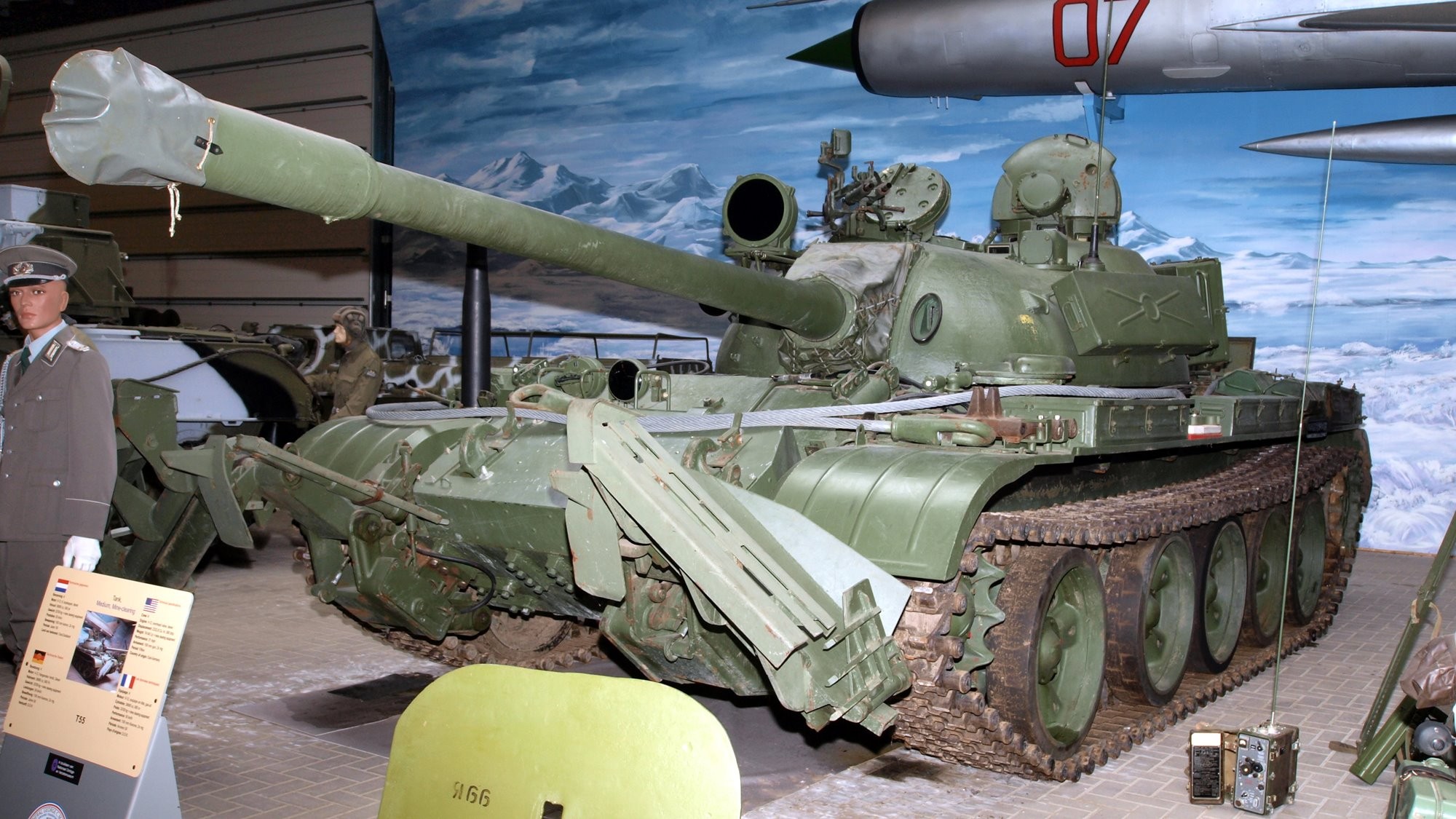
The museum is located on the site of the WWII Battle of Overloon between Allied and German forces in September and October of 1944. Opened on 25 May in 1946 as the National War and Resistance Museum, this is one of the oldest museums in Europe dedicated to WWII. In the main exhibition hall there are over 150 examples of vehicles, planes and other large military equipment, many of which were used in various conflicts of the Second World War. A number of items relate to the Cold War in Europe.

Verzetsmuseum / Resistance Museum

The Dutch Resistance Museum in Amsterdam uses a variety of period media and objects, to tell the story of the civilian population during Nazi occupation. From large scale photographs and posters, to audio and visual recordings. The exhibition is essentially about everyday life of the Dutch people and their resistance to being occupied from 14 May 1940 to 5 May 1945. The building was for some time a a Jewish cultural centre and synagogue.

Westerbork Remembrance Centre

Westerbork camp was built in 1939 to house Jewish refugees fleeing Germany and Austria. Following Nazi occupation of the Netherlands, the camp became known as the ‘Gateway to Hell’; a transit camp where hundreds of Sinti, Roma and Jewish people were sent before being transferred to concentration camps such as Auschwitz and Sobibor. Following the liberation of Europe Westerbork became an internment camp for ‘bad Dutch’ and members of the SS. In the 1950s and 1960s it served as a camp for Indo-Ducth citizens being repatriated from the newly independent Indonesia. Through personal stories, the Herinneringscentrum Kamp Westerbork tells the layered history of the site.

Wings of Liberation Museum

The museum is located in the drop zone where American paratroopers landed during Operation Market Garden of September 1944. Dioramas and galleries filled with American and German vehicles and aircraft, many of which were used in the operation, enable visitors to follow in the footsteps of the 101st Airborne Division. A popular activity is the flight simulator room, in which you can learn to fly a Dakota or F16 aircraft. Regular guided tours are offered, and information at the museum is available in Dutch, French, German and English.

Woeste Hoeve Memorial

A small, remote hamlet where in March 1945 a mission to secure a German truck by six resistance fighters went horribly wrong. They mistook SS General Hanns Rauter’s car for the intended truck. Rauter, the Nazi Chief of Police, did not die in the attack. And on 8 March 1945 the Germans exacted their revenge. From Woeste Hoeve 116 men were executed, while a further 147 prisoners were killed at nearby locations. A German soldier who refused to take part in the massacre was also executed, and buried with the Dutch victims.

Ysselsteyn War Cemetery

Ysselsteyn is the largest WWII German cemetery, and the only one in the Netherlands. There are over 31,000 burials of men from around 25 countries. These were Germans, Austrians, Poles, Russians and man who fought or supported the Nazis. Most are soldiers who were killed during the occupation of the Netherlands. The most notorious is that of Julius Dettman, a German SS officer who had Anne Frank and her family removed from their hiding place and deported. At the entrance is a circle of 87 gravestones for soldiers from WW1; whose bodies had floated down the rivers into the Netherlands.

Powered by GetYourGuide

Map of WWII & Holocaust Sites in the Netherlands

Self-Guided WWII Tour of the Netherlands

Plan Your Sightseeing in the Netherlands

Powered by GetYourGuide