Burgundy
Art, History & Archaeology Sites & Museums
Archaeology & History Sites in Burgundy
Alesia Archaeological Site
Alesia is a significant historical site in France, for it was here that Vercingetorix took his last stand against Julius Caesar in 52 BC. On top of Mont Auxois was a Celtic oppidum, that following Caesar’s defeat of the Gauls became a Gallo-Roman town. There is very little evidence of this town today, but remains of the Roman town are visible, including the theatre and basilica. Nearby is the Vercingetorix Monument erected by Napoleon III.

Arcy-sur-Cure
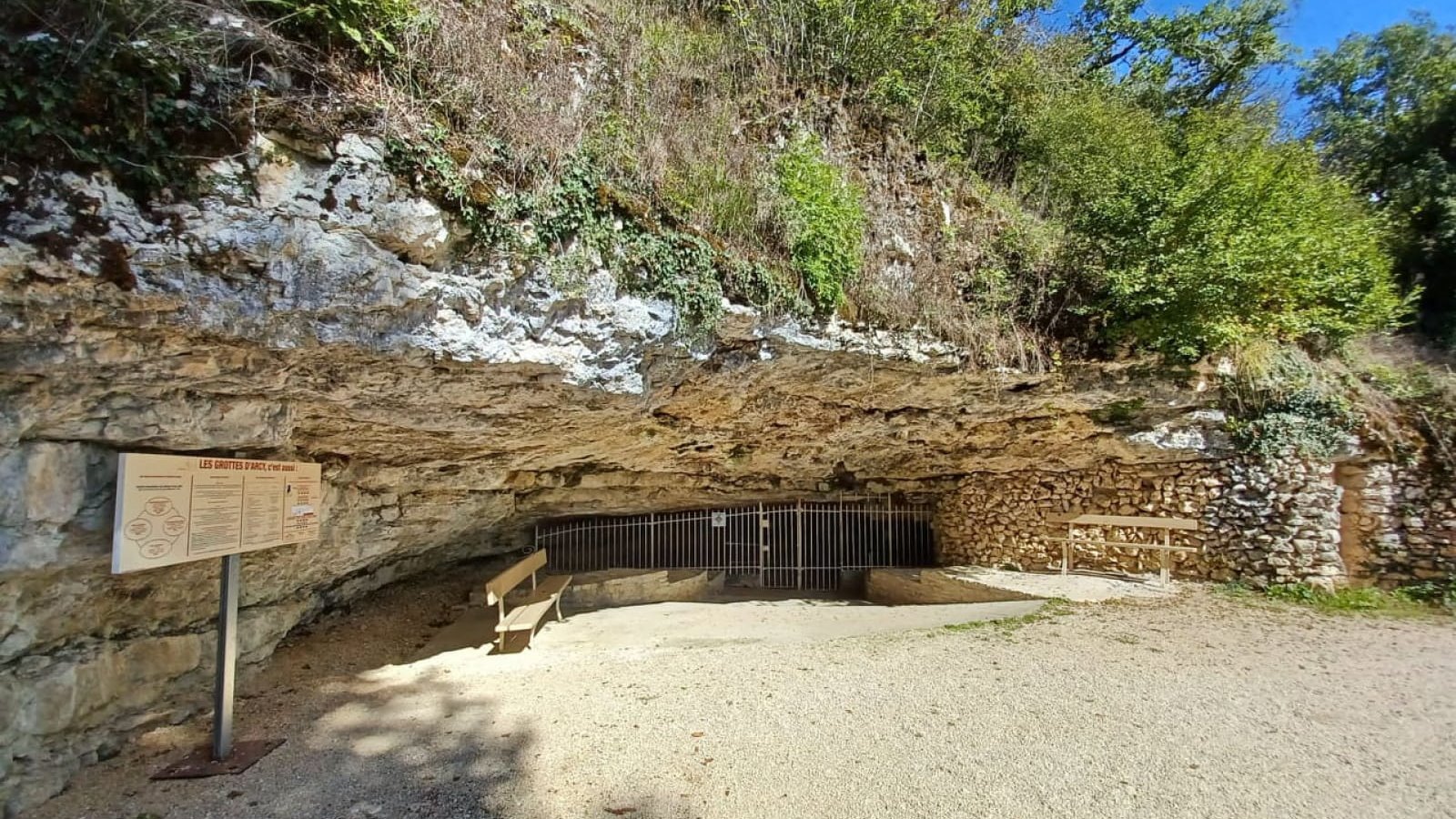
There are two decorated caves at Ary-sur-Cure, but only one – la Grande Grotte – is open to the public. This is a large cave that has been visited for many centuries and is particularly well known for the geological limestone features. The prehistoric paintings were found in 1990 during the cleaning of the walls. Most of the paintings are depictions of mammoths. The other cave has engraved images, but these are considered too difficult for visitors to get to without potential damage. These cave paintings are amongst the oldest painted images in Europe.

Augustodunum - Roman Autun
Founded by Augustus in about 15 BC to replace the oppidum at Bibracte, Augustodunum became a major Roman city. Archaeological excavations have revealed a lot of information about the city, but not all of these sites are visible for visitors today. For example, the ruins of a gladiator’s training schools was uncovered but not preserved. After Lyon, however, there are more Roman remains to see in Autun than any where else in north eastern France. These include a theatre with a spectacular view and substantial ramparts.


Cluny Abbey
Cluny Abbey is a former Benedictine monastery, that at its height of power and influence is said to have controlled some 1,500 monasteries around Europe. Founded in 910 by Duke William I of Aquitaine, it was built in the Romanesque style, with three churches built in succession from the 4th to the 12th centuries. Much of the monastery was destroyed during the French Revolution, and only the bell tower of the church and a few other buildings remain intact. A fascinating tour through the various buildings that have survived, making use of different media and display techniques, is available and a must see for anyone with an interest in the history of France and religion in Europe.

Fontenay Abbey
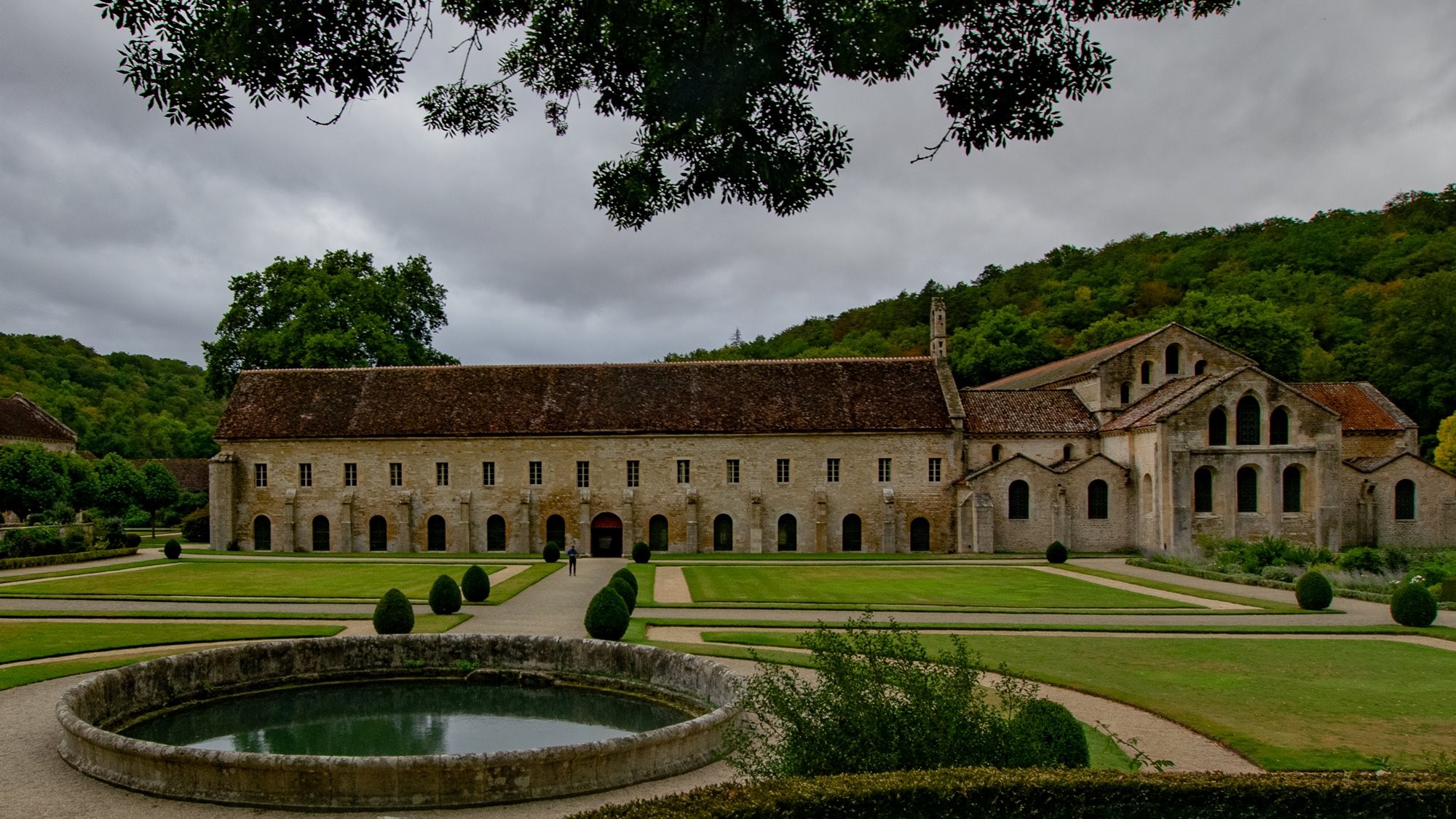
Founded in 1118 by Saint Bernard, Fontenay Abbey is one of the oldest Cistercian monasteries in Europe; and is now a listed UNESCO World Heritage Site. The abbey has retained its Romanesque style, with the exception of the refectory which was destroyed in 1745. An optional guided tour or enables you to see the very well preserved church, dormitory, cloister, council room, heating room, abbot’s lodgings, and the forge.


Guédelon Castle
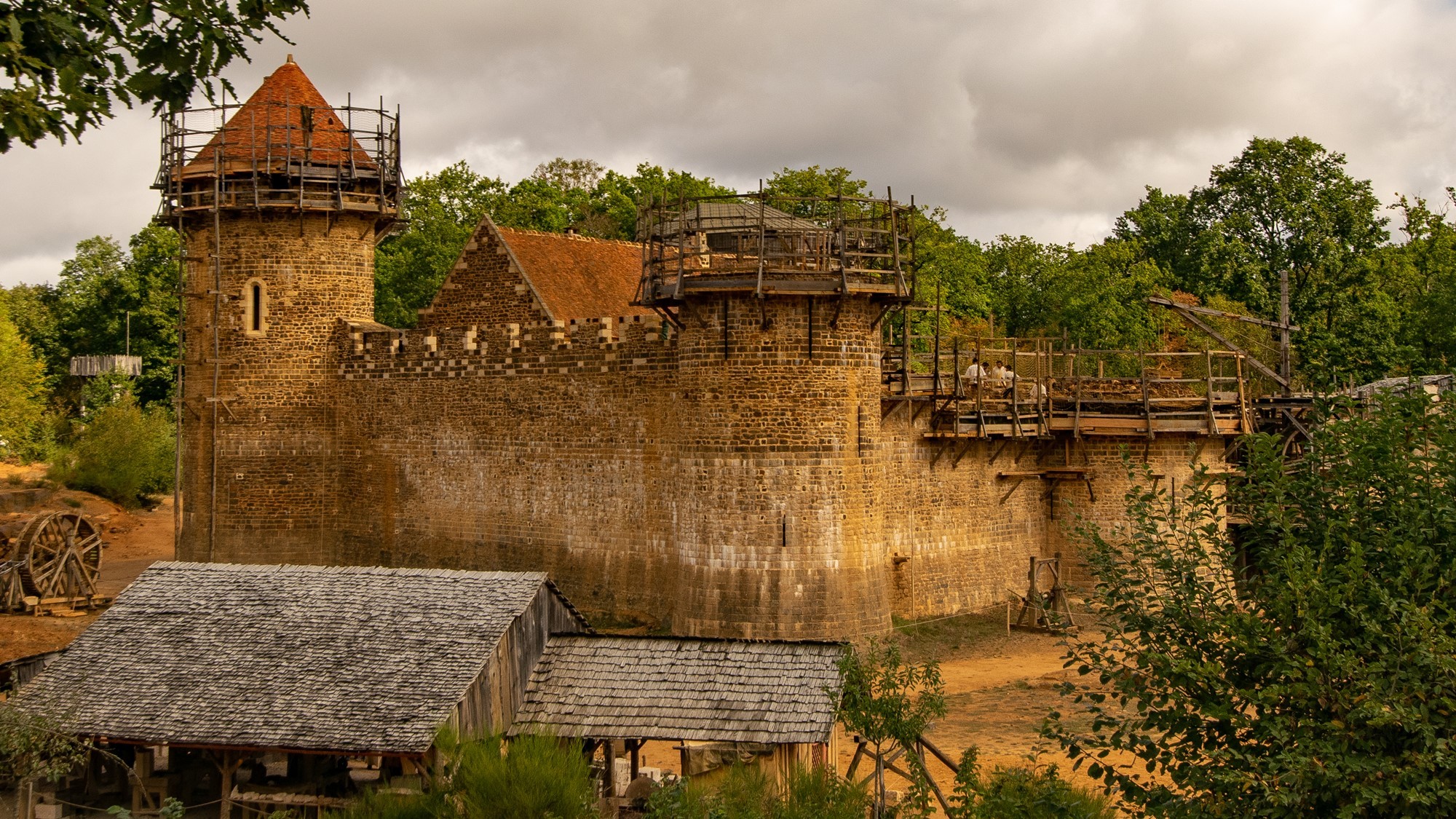
Neither a replica of a historic castle in Europe, nor a reconstruction of one. Guédelon Castle is a project that brings together a wide range of expertise to build a castle using medieval methods and techniques. In 1998 construction of this castle started in a disused quarry in rural France. Thousands of people come each year to watch the progress. Not only the building of the castle itself, but also the other related crafts. Such as baskets for carrying ceramic tiles, the firing of those tiles. A must for castle lovers.


Our Lady of the Assumption of Anzy-le-Duc
Said to be one of the most beautiful Romanesque churches in Burgundy, the three-aisled basilica with an octagonal bell tower was constructed between 1090 and 1130. The church was built for a priory founded in 847 AD, making it one of Burgundy’s oldest monastic communities. Some of the priory building still survive. The church is known for its Romanesque art: a remarkable figurative capital cycle in the nave, sculptures on the main and southern portals, and 12th century frescoes in the choir apse.

Rock of Solutré
A visually striking geological feature, the Rock of Solutré makes up the centrepiece of an archaeological and botanical park. For some 55,000 years Neanderthal hunters and modern humans of the Upper Palaeolithic period, came to hunt reindeer and horses in their thousands. The sheer number of stone tools and bone remains makes this one of the richest prehistoric sites in Europe. This is the type site for the Solutrean culture of the Upper Palaeolithic at around 24,000 years ago. At the foot of the rock feature is a museum that tells the story of this significant and interesting archaeological site.

Saint Germain Abbey
With over 15 centuries of monastic history the Abbey of Saint Germain of Auxerre offers visitors a fascinating insight to the medieval era in this area of Burgundy. This former Benedictine Abbey still has in situ remains of 9th century wall paintings – the oldest frescoes in France. The dormitory wing of the abbey contains the Museum of Art & History, with the Gallo-Roman Archaeology Room and the Medieval Archaeology Room, with artefact from Auxerre and the surrounding area. In what was the scriptorium is an exhibition on the copying and illumination of manuscripts.

Saint Lazare Cathedral
The Cathédrale Saint-Lazare d’Autun has some of the finest examples of Romanesque art in Burgundy. Created by the named and highly accomplished French sculptor, Gislebertus, carved capitals in the nave and choir depict various scenes from the bible, while the tympanum on the south portal depicts the Last Judgement. The cathedral was completed in 1147 and built to accommodate pilgrims on their way to Santiago de Compostela from Vézelay. Their stop in Autun to venerate the relics of Saint Lazarus.

Saint-Étienne of Auxerre Cathedral
The current cathedral in Auxerre is the 4th church to have been built on this site since the 5th century. When the young bishop Guillaume de Seignelay was appointed to the seat of Auxerre in 1210, he thought the 11th century Romanesque cathedral was archaic. He chose to have it rebuilt in the French style then gaining popularity in the Île-de-France region. Building of the new Gothic cathedral began in 1215 and was completed by 1230. Ransacked during the ‘Wars of Religion’, minimal damage during the French Revolution, spared destruction during WWII, the cathedral finally underwent major restoration in the first decade of the 21st century.

Vézelay Abbey - Basilica of Vézelay
Constructed between 1120 and 1150 the Basilica of Sainte-Marie-Madeleine is one of the finest examples of Romanesque architectures in Burgundy. A Benedictine monastery was founded in the 9th century on the hill top of what is today the town of Vézelay. Soon after the monks acquired the relics of Mary of Magdalene, making this an important pilgrimage site, still today. The relics are on secure display in a crypt chapel. The church is well-known for its unique tympanum – thought to depict a spiritual defence of the Crusades. Today only the abbey church remains of the monastic buildings. The monastery was first attacked by the Huguenots and then again during the French Revolution.

Museums & Art Galleries in Burgundy
Alésia MuséoParc
Not far from Mont Auxois, the location of the Celtic oppidum of Alesia, is the Alésia MuséoParc. With a variety of display techniques and multimedia a circular exhibition space, designed by Bernard Tschumi, tells the Battle of Alesia in September 52 BC in extraordinary detail. Outside is a reconstruction of the system of fortifications built by Caesar to surround and lay siege to the Celtic settlement.

Dijon Archaeological Museum
The Musée archéologique de Dijon is housed in the main wing of the Benedictine abbey of Saint-Bénigne. Exhibits represent the full sweep of humanity’s past in Burgundy, from prehistory to the Medieval period. Beneath the abbey’s vaults are Romanesque and Gothic sculptures, and Roman votive offerings found at the source of the Seine River. One of the highlights of the permanent displays is the so-called Trésor de Blanot. A collection of gold and bronze jewellery found near the town of Blanot in a bronze cauldron dating to the Bronze Age.

Maison du Grand Site - Rock of Solutré
On the edge of the village of Solutré-Pouilly, an within site of the Rock of Solutré is the Maison du Grand Site. A visitor centre for the archaeological site, which is listed as a grand site de France, and the surrounding area. Besides general information for visitors to the area looking for things to do or accommodation, the centre has a few exhibits outlining the significance of the site. There is also a gift shop and café, which serves refreshments as well as freshly cooked meals using locally sourced ingredients.

Musée de la Résistance en Morvan
The Musée de la Résistance en Morvan was founded in 1983 by a group of academics from the University of Burgundy and members of the French Resistance. Period documents, photographs and contemporary artefacts are used to explore three themes: the occupation of France, the French Resistance, the Liberation of France, and remembrance. From the museum it is possible to follow ‘Routes of Memory’, that take visitors to various historical points of interest in the area.

Musée de Préhistoire de Solutré
At the foot of the the spectacular geological feature known to us as la Roche de Solutré and used as a hunting site for some 55,000 years is a museum dedicated to telling that story. On display in the museum are a diverse range of artefacts from one of Europe’s largest prehistoric sites. The museum is set within a landscaped archaeological park. In the shadow of the ‘rock’ are eight stations at which visitors can learn about the local flora, explore the archaeological site and learn about the history of research here.

Musée Rolin
The 16th century Palais des Rolin is now home to the archaeology museum, Musée Rolin. Besides a substantial fine arts collection, there are also two permanent archaeological exhibitions: medieval art and the history of the Roman town of Augustodunum, or Autun. There are various Roman objects on display, including numerous bronze figurines and a mosaic floor that depicts Neptune, but of particular note is a large collection of carved funerary stelae.