Somme
Art, History & Archaeology Sites & Museums
The Somme is one of five departments in the Hauts-de-France region of metropolitan France. The other four are: Aisne, Nord, Oise, and Pas-de-Calais.
Create Itineraries & Travel Lists for Somme
If you are planning a trip to the Somme Department of France, you can use our Itinerary Builder with the lists of sites and museums linked to below to create your own travel lists (such as places you have been to, places you would like to visit) and itineraries. These can be shared with your friends, privately and on social media. To make use of this feature, however, you will need to login or register as a new user. Registering to use these features is free of charge. Once registered and logged in, you can use the lists below to select sites and museums you would like to add to your itinerary and/or travel lists.
Please Note: the lists below only include sites and museums in the Hauts-de-France region of France, go to the France Travel Guide to find places to visit in the other regions. The information on this page is curated by various members of the Archaeology Travel team, based on both personal visits and research.
Archaeology & History Sites in Somme
Abbeville Belfry
Although heavily restored as a result of bomb damage in 1940, this is one of the oldest belfries in France. The Abbeville belfry is one of 56 such structures in northern France and Belgium inscribed on the UNESCO List of World Heritage Sites in 1999 and 2005. In 1130 the Count of Ponthieu granted the people of Abbeville the right to form a commune. A privilege that was confirmed in 1184 by the Charter of Abbeville. It is thought the belfry was completed in 1209.

Amiens Cathedral
Built between 1220 and 1270, the Cathédrale Notre-Dame d’Amiens is one of the finest examples of Gothic sacred art. A series of Renaissance polychrome sculptures inside the church depict Jesus cleansing the temple, while the western portal is decorated with early Gothic sculpture. Although free to visit, a tour of the towers and a visit to the treasury require separate tickets. The cathedral is well known for its spectacular light show, Chroma: which can be seen during the Christmas market season and from mid July to the end of September.

Château Fort de Rambures
Passed down through marriage and inheritance, the Rambures estate has been in the same family since the 11th century, although the castle was completed after the 100 Year’s War in the 15th century. Built largely of brick, the square castle with four towers lies within a dry moat. Lord Rambures is mentioned in William Shakespeare’s play Henry V. The castle is set in a romantic park with an 18th century chapel, an English style park with a historic collection of roses.

Chaussée-Tirancourt Roman Camp
Covering an area of 35 ha and surrounded by two ramparts and a ditch 30 m in width, this fortified spur on the northern bank of the Somme River has long been known as ‘Caesar’s Camp’. Excavations in the 1980s, at a gateway in the ramparts, produced coins, ceramics and other artefacts that suggest this was used by the Romans as a military camp between 40 and 25 BC (after the Gallic Wars). The Somme River is an important route to the English Channel, and the Roman road to Boulogne-sur-Mer is just 3km to the north. The camp is accessible via Samara Archaeological Park.

Collegiate Church of Saint-Vulfran
Dedicated to Saint Vulfran, the church is one of the finest examples of Flamboyant Gothic architecture in northern France. Building commenced in June 1488. During the bombing of Abbeville at the beginning of WWII, part of the church was destroyed by a fire that spread through the city. The towers and the façade remained unscathed. A painting of the church by Eugène Boudin (1884), one of the leading members of the Rouen School of Impressionists, hangs in the Museo Nacional Thyssen-Bornemisza, Madrid.

Jardin Archéologique de Saint-Acheul
Saint Acheul is the type-site for the Early Palaeolithic Acheulean industry of stone tools. What visitors can see is an exposed section of prehistoric river gravels, with detailed information panels explaining the geological and archaeological significance. This is an important site for the history of archaeology. It was here in 1854 that archaeologists found stones, later to be called Acheulean hand-axes, that they argued had been modified by early humans.

Lochnagar Crater
Also called le cratère de la Boisselle after the name of the nearby village, this enormous hole in the ground is one of the most popular sites of the Somme Battlefields. At 7h28 on 1 July 1916, explosives were detonated beneath German front line trenches. On the day the crater measured around 100 m wide and 21 m deep. It is possible to walk around the rim of the crater, but it is forbidden to enter. A wooden cross, with timber from Tyneside, stands beside the crater, at the foot of which visitors lay wreaths.

Roman Amiens - Samarabiva
At the southern end of Place Gambetta in the centre of Amiens is a small circular inspection well covered in thick glass. It looks onto the very meagre remains of 2nd and 4th century AD forum walls a few metres below current street level. These are all the Roman remains in Amiens in situ for the visitor to see today. Although there have been significant archaeological excavations here, particularly during reconstruction of the city following WWII, nothing of the Roman period has been preserved. Gallo-Roman artefacts are on display in the Picardy Museum.

Thiepval Memorial to the Missing of the Somme
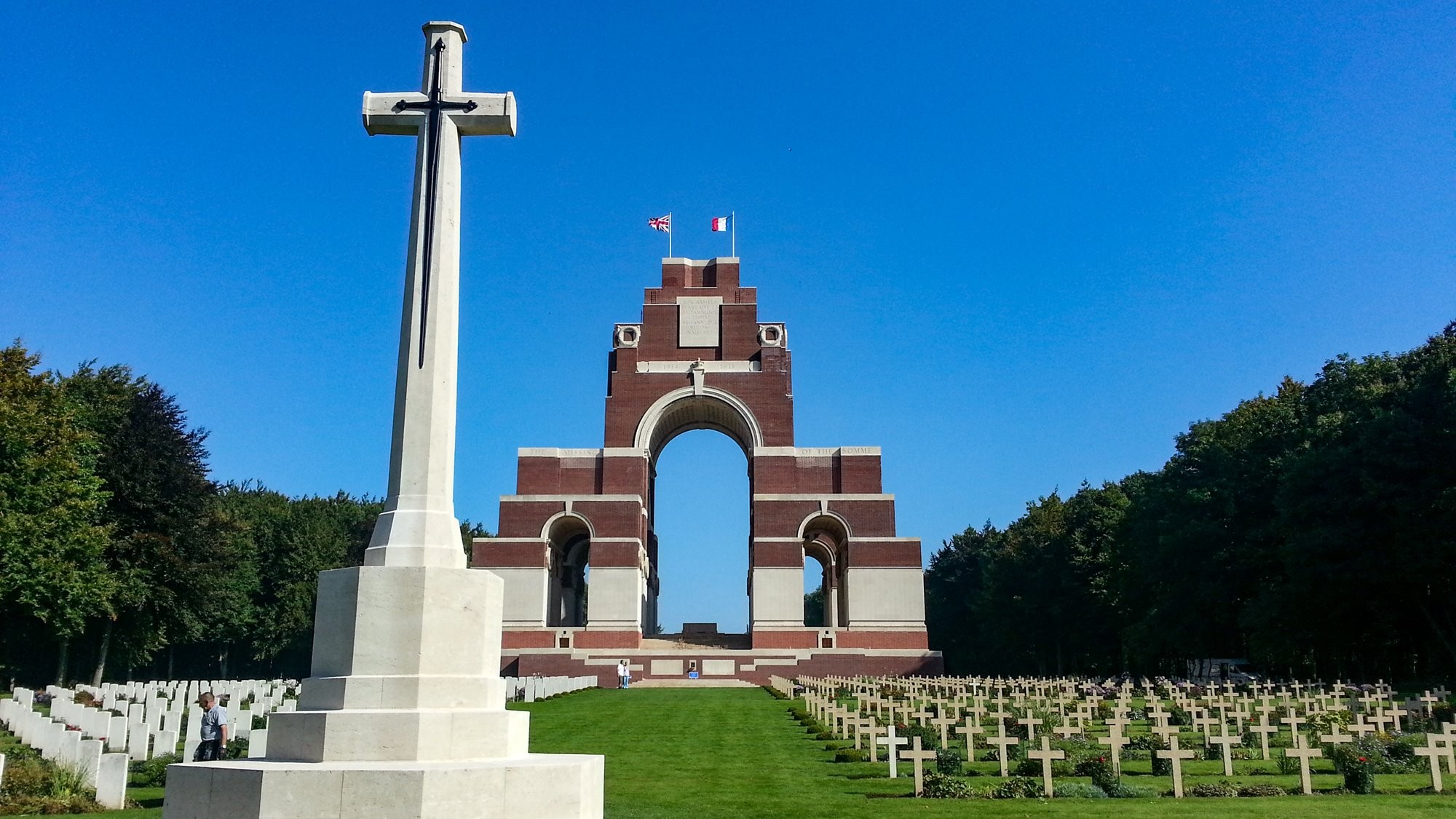
Designed by Sir Edwin Lutyens, the Thiepval Memorial to the Missing of the Somme has been described as “the greatest executed British work of monumental architecture of the twentieth century”. Construction began in 1928. Four years and 10 million bricks later it was completed at the cost of £117,000, which is the equivalent today of around £10 million. The result is not just a memorial to all those that fought and died on the Somme, but one that acknowledges the British and French alliance during the battle, and perhaps most importantly, it commemorates over 72,000 British and South African soldiers that have no known grave.


Villers-Bretonneux Military Cemetery
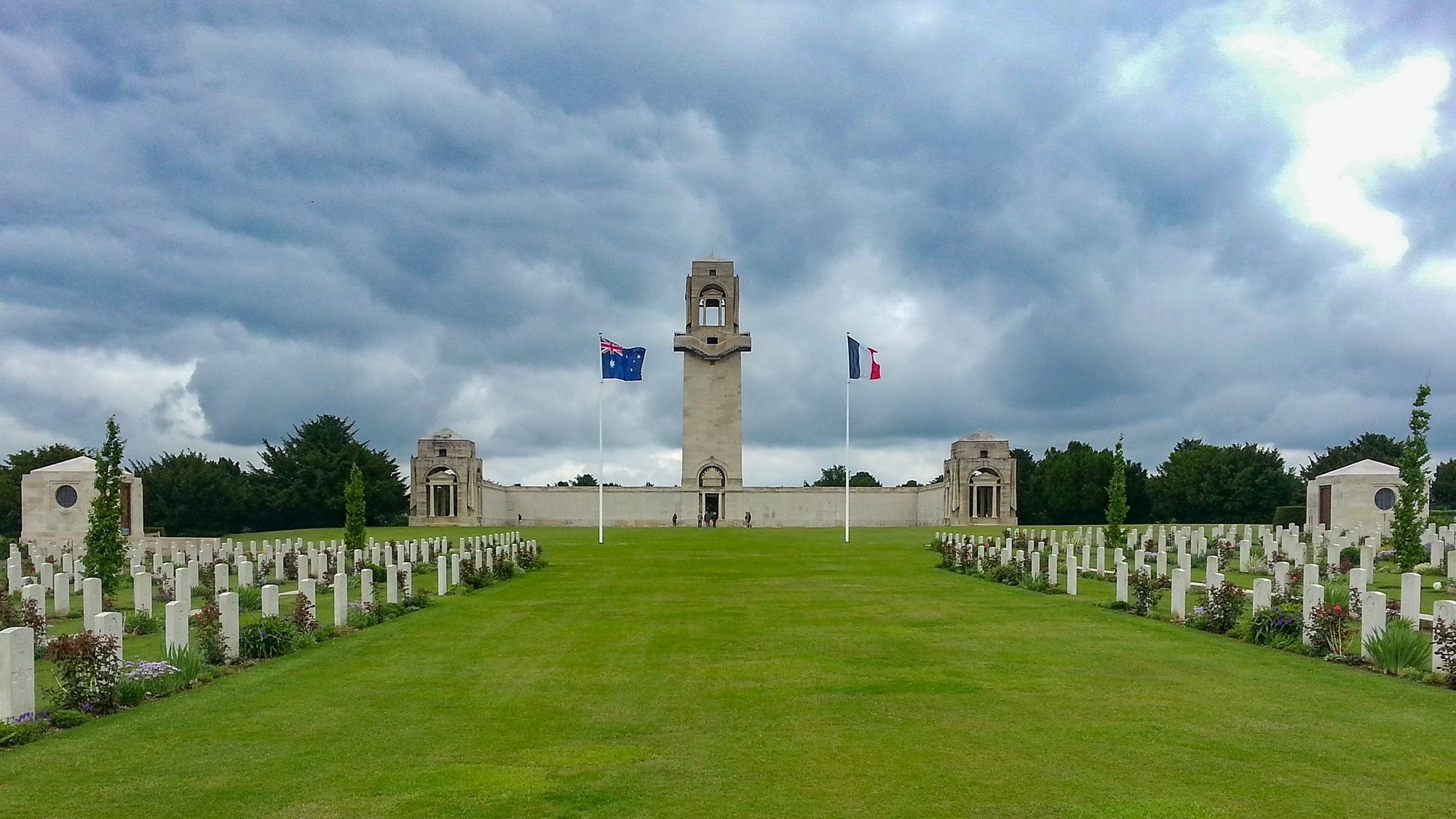
The town of Villers-Bretonneux was captured by the Germans on 23 April 1918. A number of Australian Divisions recaptured the town follows several days of conflict. The cemetery just outside the town has 2,000 graves, 779 of these are named Australian soldiers. Adjacent to the cemetery is the Australian National Memorial, which remembers all the Australian servicemen who died during the First World War in both France and Belgium – particularly those without an identified grave. Officially, and as of 2023, there 10,729 named Australian servicemen on the memorial. Both the Memorial tower and the military cemetery were designed by Sir Edwin Lutyens.

Museums & Art Galleries in Somme
Boucher de Perthes Museum
Housed in the former Abbeville town hall since 1954, the Musée Boucher de Perthes-Manessier is an amalgamation of two of the city’s collections. Fine and decorative arts from the Middle Ages to the contemporary era, and Palaeolithic artefacts recovered from early Stone Age sites along the Somme River. This historical collection of Acheulian stone tools are the very objects Boucher-de-Perthes worked with when declaring these implements were made by humans. The museum is currently being extensively renovated and will open in 2026.

Picardy Museum
Founded in the 1850s, the Musée de Picardie was one of the first purpose-built museums in France and is today one of the largest French regional museum. As a regional museum its collections and permanent exhibitions are wide-ranging. From the prehistory and Roman period of the Amiens area, to medieval art through to 19th century painting and sculpture. An interesting display of Egyptian and ancient Greek artefacts includes a beautifully painted mummy coffin and a Corinthian helmet.

Samara Archaeological Park
Located on the banks of the Somme River northwest of the city of Amiens, Samara is both an archaeological theme park and a nature reserve. The park occupies 30 hectares which lie between a Roman military camp and the river, and provides the perfect setting for children of all ages to explore 600,000 years of prehistory to the Gallo-Roman period, through reconstructions of domestic settings through the ages and demonstrations of prehistoric crafts.