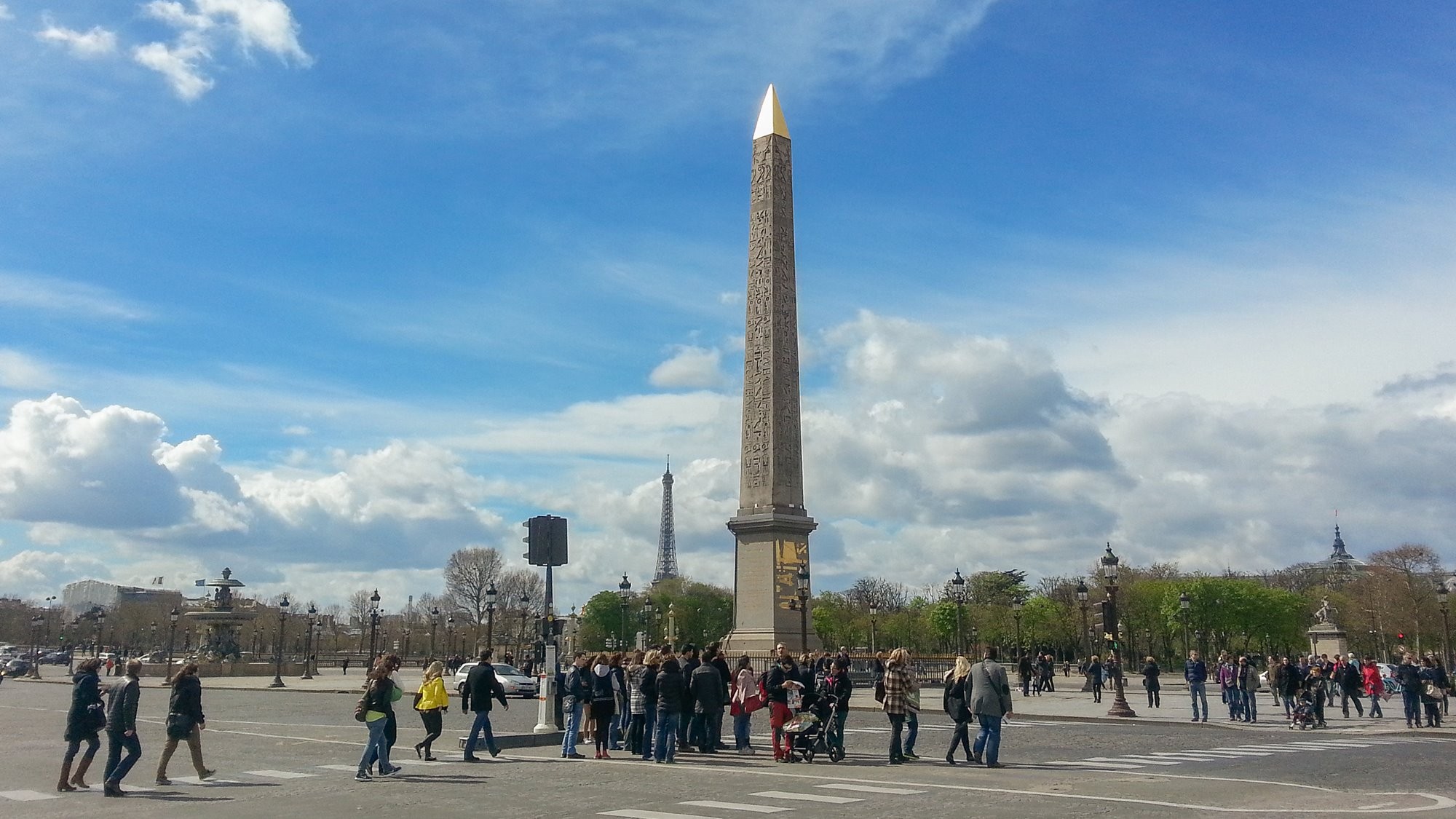
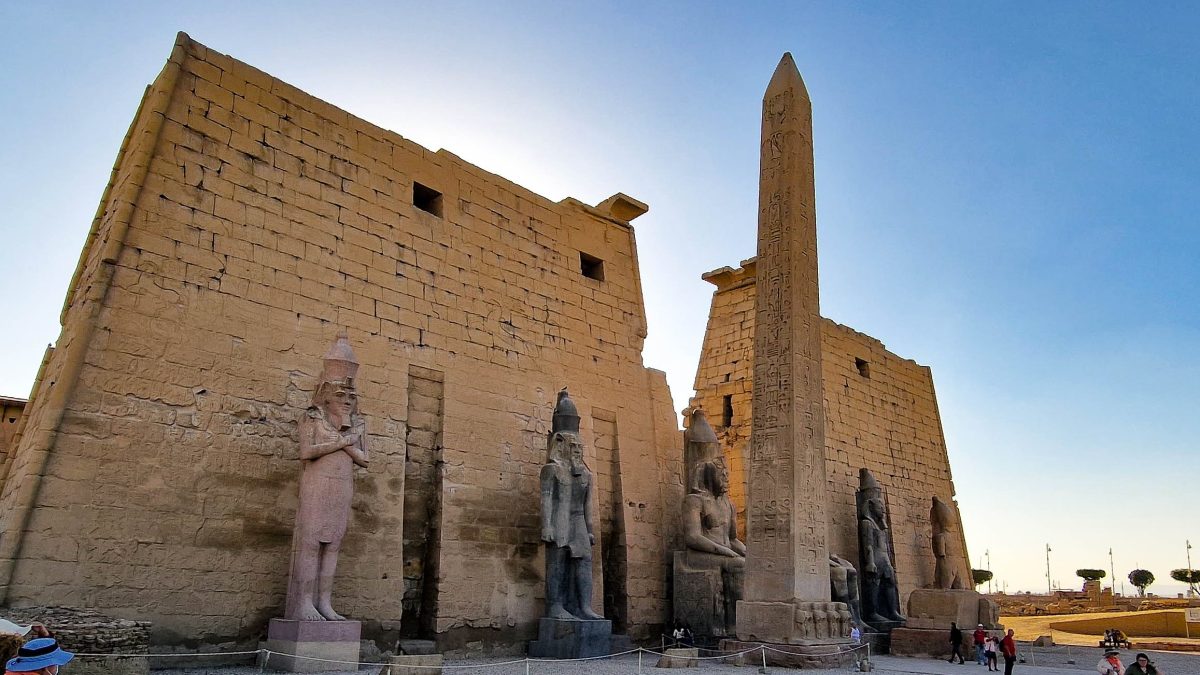
At the bottom of the Champs Elysées and set in the centre of one of the most well known traffic circles in the world – the Place de la Concorde – stands an ancient Egyptian obelisk that was brought to France from Luxor in Egypt. The so-called Luxor Obelisk is made of red granite, measures 22.5 metres in height and weighs an estimated 227 tonnes. This obelisk and its pair, that still stands in front of the first pylon of the temple in Luxor, were the largest obelisks to have been erected by Ramses II in Egypt. In April 2025, French Egyptologist Jean-Guillaume Olette-Pelletier revealed he had found hidden inscriptions, coded references to Ramses II’s divine power.
- Thomas Dowson
- Last Checked and/or Updated 25 April 2025
- France, Egyptomania
The Obelisks in Luxor
Initially, both the obelisks from the Luxor Temple were promised to England. Following diplomatic negotiations they were then both gifted to France by Pasha Muhammed Ali. In return, King Louis Philippe gave the Pasha a large clock. This clock is still in place in the clock tower of the mosque at the summit of the Citadel of Cairo.
The cost of relocating the obelisk to Paris was 2.5 million Francs at the time, a sum not available for a second operation. Although largely a symbolic gesture, it was President Francois Mitterrand who retracted French claims to the obelisk that remains in Luxor.
The new pedestal on which the obelisk was placed has gold representations of the apparatus used to lower the obelisk, transport it and then raise it in Paris. Models of the apparatus used in this relocation of the obelisk are at the Musée de Marine.
The obelisk in Paris is one of a number of ancient Egyptian Obelisks in cities around the world, including Rome, London and New York. Read more about the history of the Luxor Obelisk and how it comes to be in Paris in Susan Sorek’s book The Emperors’ Needles.
Crypto-Hieroglyphs found on the Luxor Obelisk
April 2025 and the obelisk is back making headlines around the world. French Egyptologist, Jean-Guillaume Olette-Pelletier, has discovered seven previously unknown hidden messages, or crypto-hieroglyphs, carved into it. The inscriptions date back some 3,000 years to the reign of Pharaoh Ramses II. And were designed to be seen from specific angles, some only visible to nobles arriving by boat at the Luxor Temple in ancient Egypt during the Opet festival. They include coded references to Ramses II’s divine power, like “Appeasing a power for Amun.” This discovery sheds new light on how ancient Egyptians used monuments for secret as well as overt propaganda.
During lockdown in 2020, Olette-Pelletier would take his permitted walk to the Luxor Obelisk. And this is when he first noticed something unusual. It wasn’t until December 2021, when the obelisk was surrounded by scaffolding because of the up-coming Paris Olympic Games, that he was able to study the inscriptions up close.
So far, the best article I can find on this research is published in Sciences et Avenir. There you will find the full and fascinating story, so I will not summarise it here. The article is in French, use your browser’s translation function to get the language you require. When I find more, I will add the link(s) here.
Obelisk Pedestals & the Louvre-Lens Museum
Visible on the pedestal of the obelisk in Luxor are four carved baboons, raising their front paws. Ancient Egyptians observed baboons in nature making such a gesture at dawn, and interpreted this as the animals ‘adoring’ the sun. Both obelisks had identical sculpted pedestals.
The inscriptions on these structural bases, in fact a hymn to the sun, clarify the significance: the baboons are raising their hands, singing and dancing in adoration of the rising sun, which they guide and assist during its passage throughout the day.
The inscriptions on the bases of the obelisks tells that Ramses II named these two obelisks. The inscription at the base of the obelisk in Luxor (the one of the eastern side of the entrance) reads that Ramses made a large obelisk that he called ‘Ramses Beloved of Amum’ (the rising sun). The inscription for the obelisk now in Paris (on the west of the entrance in the first pylon) reads ‘Ramses Beloved of Atum’ (the setting sun).
Given the baboons are depicted standing on their hind legs with their arms raised, their genitals are clearly visible. This was thought a bit too much for puritanical Paris in the 1830s, and so the pedestal was given to the Louvre in Paris. With the opening of the Louvre-Lens museum in December 2012, the pink granite pedestal was included in their Galerie du Temps, a collection of 200 objects from the Louvre on medium and long term display in the new museum in the town of Lens (Pas-de-Calais region of France).
Axe Historique
The Luxor Obelisk is on one point on what is called the ‘axe historique’ – Paris’s historical axis. This is a line of monuments and landmarks that starts at the Louvre and extends out westwards to the Arc de Triomphe and the Grand Arche at La Défense. It is also called the Voie Triomphale, the triumphal way. The Place de la Concorde is along this axis. In this photograph, looking up the Allée Centrale of the Jardin de Tuileries, the Luxor Obelisk is perfectly aligned with the Arc de Triomph in the distance. The historical axis srated in the 17th century with the creation of the Champs Élysées, designed to create a view west beyond the central axis of the gardens of the Palace of the Tuileries. In the 1980s François Mitterrand initiated the most recent addition, La Grande Arche de la Fraternité.
If the influence of ancient Egypt on art and architecture in the West interests you, see Ancient Egypt on the Streets of Paris. Also, Egyptomania; Ancient Egypt & the Popular Imagination.
The Place de la Concorde Features on many Guided Tours
Find more guided tours of Paris on GetYourGuide and Viator. GuruWalks lists a number of excellently reviewed free walking tours of Paris. But if you are looking for a professional tour guide to create a custom walking tour, see GoWithGuide.
Donations and memberships start from as little as €5.
Add the Luxor Obelisk to Your Itineraries & Travel Lists
You can create your own travel lists (such as places you have been to, places you would like to visit) and itinerary for your Paris visit. These can also be shared with your friends and on social media. To make use of this feature, you will need to login or register as a new user.
For more sites and museums in Paris and Île-de-France, see our Paris City Guide and our A – Z of Art, Archaeology & History Sites & Museums in Paris & Île-de-France.
Luxor Obelisk, Place de la Concorde
At the bottom of the Champs Elysées and set in the centre of one of the most well known traffic circles in the world stands an Egyptian obelisk from the Luxor Temple. The so-called Luxor Obelisk is made of red granite, measures 22.5 metres in height and weighs an estimated 227 tonnes. This obelisk and its pair, that still stands in front of the first pylon of the temple in Luxor, were the largest obelisks to have been erected by Ramses II; others were set up at temples in Heliopolis and Tanis. The obelisk arrived in France on 10 May 1833. And on 25 October the obelisk was raised watched on by King Louis-Philippe I and an eager crowd.

Questions & Comments
Ask questions and join or start a conversation in our Community Forum and Discussion Boards. Past contributions are available for all to view. Only members who are logged in can post new reviews, questions and answers.